
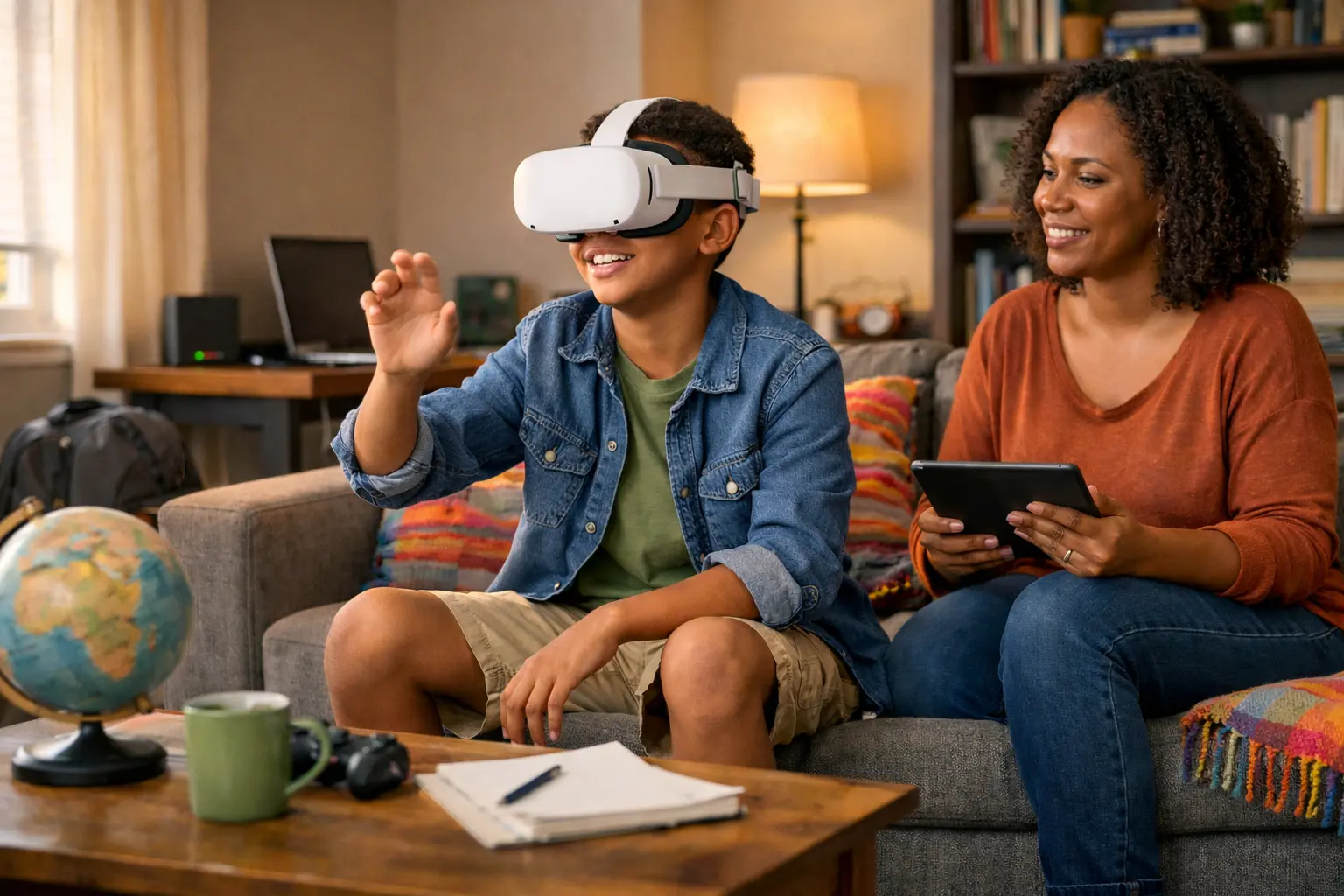
When you think of virtual reality, high-tech gamers may come to mind. But VR can now be used in nearly all facets of life, including mental health applications, virtual social interactions, and educational purposes. In fact, virtual field trips are increasingly common, especially as VR headsets (like the Meta Quest 4 or Apple Vision Pro 2) are more affordable.
Why VR field trips? One key benefit is greater accessibility to the world for students of all economic backgrounds. Not only do these trips create fun and engaging experiences, they also improve educational outcomes, including better retention rates.
However, you’ll need the right internet connection to make the most of immersive virtual reality. Otherwise, these high-definition environments could stutter, causing a poor experience and even physical side effects.
The secret to feeling like you’re standing in a faraway place? A strong connection powered by fiber internet.
Find out more about how virtual field trips are changing the face of education and how fiber makes it happen.
Beyond 360 video: Immersive VFT platforms
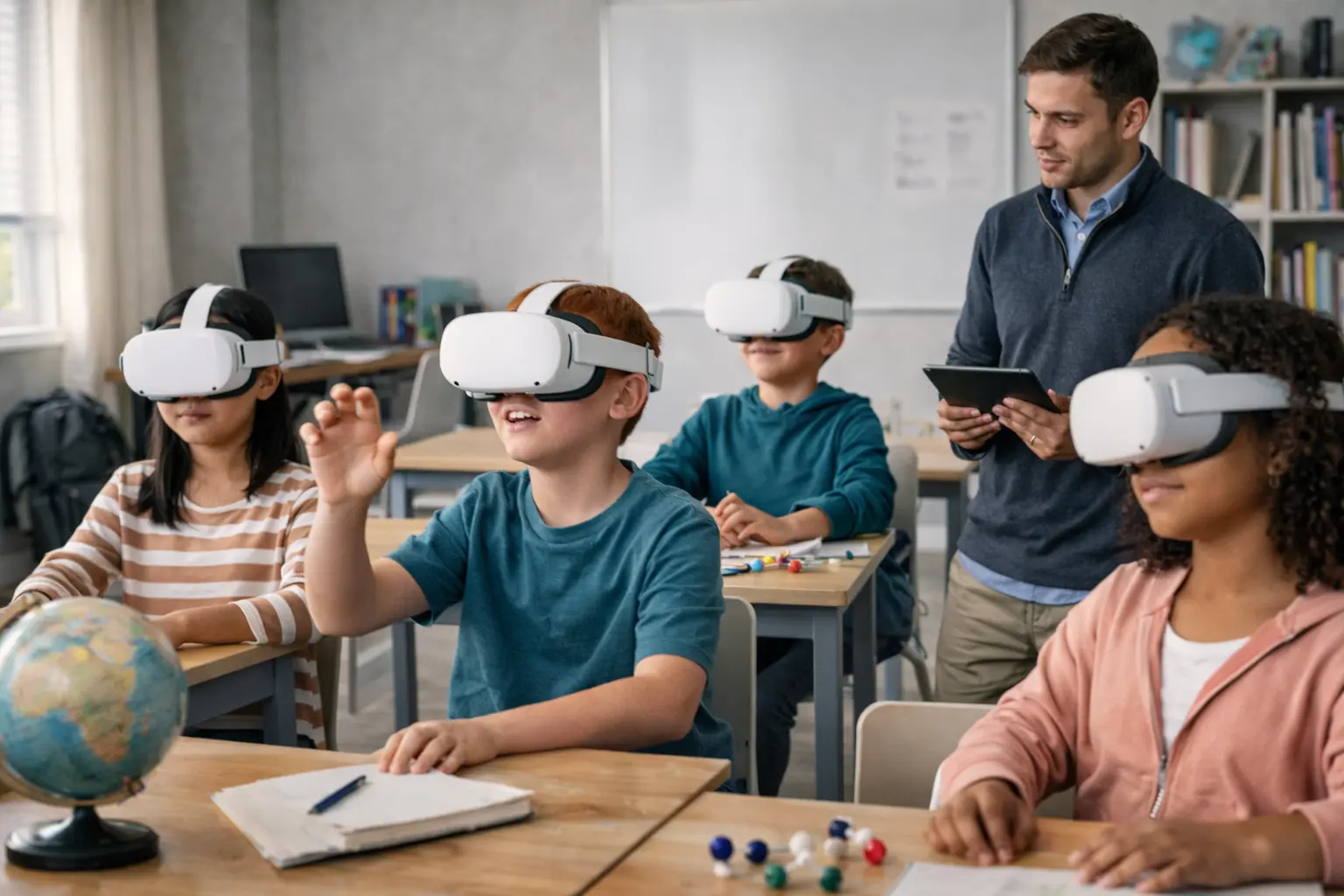
Incorporating virtual field trips into the classroom isn’t just about giving students a fun experience. It’s about creating an immersive experience that sparks curiosity and creativity, no matter what physical boundaries exist.
Virtual reality apps as a form of place-based education can improve motivation, understanding, and participation—especially in STEM topics. Plus, they’ll form connections by interacting with each other and knowledgeable guides in real-time.
There are several different platforms you can use for VR field trips. Here are some starting points to use as inspiration:
- Google Arts & Culture (VR Edition): Explore cultural destinations, museums, and historic sites through the Google Arts & Culture app. Students can explore Italy, Hong Kong, the British Museum and so much more—no passport required.
- Expeditions 2.0: This Oculus-based platform pairs VR field trips with lesson plans, making it easy for teachers to connect the experience with their classroom learning objectives. Choose between self-guided or teacher-led tours through the Amazon rainforest, Antarctic ice sheets, Aztec ruins, and other incredible places across the globe.
- NASA’s Mars VR: Students can explore Mars’ Gale Crater behind the wheel of NASA’s Curiosity Rover.
Many of these immersive platforms often require downloading 5GB+ scenes instantly—something Quantum Fiber® from AT&T can handle in seconds. Symmetrical speed (available on most fiber plans) is important because it balances upload and download speeds. Experiencing lag in a real-time environment not only causes choppiness, but it can also lead to motion sickness in students.
The fiber difference for VR
Virtual field trips are more accessible than traveling the world with an entire class, but you’ll need some basic infrastructure for it to work properly, including a strong internet connection. Studies show that students attending virtual field trips have better recall scores compared to those who watched regular videos. That’s why it’s important to ensure true immersion to maximize learning and engagement.
One of the key metrics to work on for any kind of extended reality is motion-to-photon latency. This is the amount of time delay between moving a part of your body and seeing that movement on the VR display. When a slow network causes lag, the user can get dizzy. Fiber internet helps avoid this sensation with <10 milliseconds (ms) ping.
Incorporating VR field trips in the classroom also requires symmetrical speeds for uploading and downloading data. This is necessary for students who are broadcasting their movements and voice in a multi-user VR class.
Finally, optimize your Wi-Fi to ensure a “dead-zone free” classroom so students can move safely within their VR boundary without losing a signal. This is easy to do with Quantum Fiber Wi-Fi integration.
Affordable access: VR for every budget
While purchasing a classroom set of VR goggles is cheaper than taking everyone to Europe, it still may be financially out of reach for many schools and families. But you can still incorporate immersive virtual reality without an expensive setup. WebVR and WebXR, for instance, allows you to access immersive trips via a simple browser such as Chrome or Safari. Take 360-degree video tours online while connecting headsets or smartphones to elevate the experience.
Or build your own VR headset using inexpensive cardboard frames that hold a smartphone. When paired with high-speed streaming, even this entry-level virtual reality can feel like a new level of learning.
Take advantage of free VR education libraries. Discovery Education and The Nature Conservancy are just two providers that consistently offer free content for VR field trips.
Practical tips for parents and educators
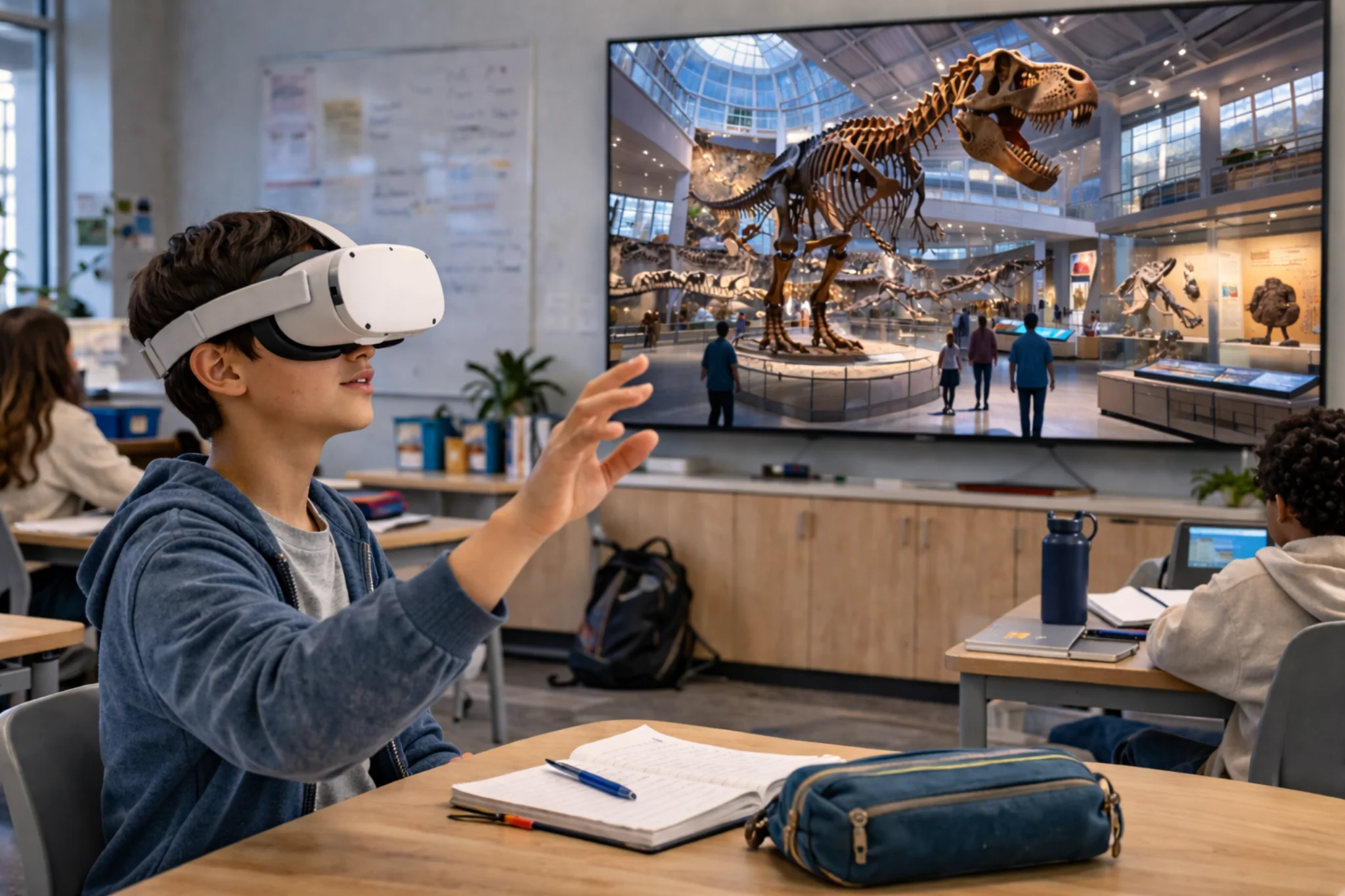
As you begin to imagine how a virtual field trip could enhance student learning, follow a few best practices to create a memorable experience. Start by curating the content with age-appropriate VR trips. Most platforms give a range of recommended grades, but you can also use Common Sense Education to help you find options that meet your students’ needs.
Next, think about physical safety in the classroom or the living room. Set boundaries so that students don’t walk into each other. You can either have them stand on mats to create a physical guide or work in pairs with one student immersed in a headset while the other one monitors their movements.
Finally, consider the lasting impact of your VR field trip. Use it as a starting point for other projects. For instance, you could pair a VR visit to the Smithsonian with a local library research project.
The future of curiosity with virtual field trips
Whether you’re designing your next unit for the classroom or wondering how to best support your child’s passions, VR trips provide equal access to world-class experiences regardless of a student’s geography or income. Planning your next trip is as easy as plugging in and putting on the headset.
Travel with minimal lag with Wi-Fi internet from Quantum Fiber.
Content Disclaimer - All content is for informational purposes only, may require user’s additional research, and is provided “as is” without any warranty, condition of any kind (express or implied), or guarantee of outcome or results. Use of this content is at user’s own risk. All third-party company and product or service names referenced in this article are for identification purposes only and do not imply endorsement or affiliation with Quantum Fiber. If Quantum Fiber products and offerings are referenced in the content, they are accurate as of the date of issue. Quantum Fiber services are not available everywhere. © 2026 AT&T Intellectual Property. AT&T and the Globe logo are registered trademarks of AT&T Intellectual Property. All other marks are the property of their respective owners.