

Quick summary: Wi-Fi 7 represents the latest advancement in wireless technology, introducing Multi-Link Operation (MLO) to help manage the growing connectivity needs of high-demand households. By allowing devices to connect across multiple frequency bands simultaneously, Wi-Fi 7 helps provide a reliable and responsive online experience for users.
Imagine a typical evening in your household where every room is buzzing with digital activity. You might be settling in to stream a new movie in 4K, while in the next room, a family member is competing in an intense online gaming tournament that requires split-second precision. Simultaneously, your smart home system is uploading security footage to the cloud, several smartphones are updating their apps in the background, and a tablet is downloading a large educational file for a school project. In the past, this "digital rush hour" might have caused a frustrating cycle of excessive buffering, dropped calls, and significant lag. However, with the emergence of Quantum Fiber® Internet from AT&T, the way your home handles this massive influx of data is fundamentally changing.
This isn't just a minor speed bump; it's a complete architectural shift in how wireless signals are managed through advanced Wi-Fi technology. As we move further into an era defined by the Internet of Things (IoT) and high-bandwidth applications, understanding these changes helps you stay ahead of the curve. Quantum Fiber is at the forefront of this shift, providing hardware powered by Wi-Fi 7 designed to empower your digital life. This revolutionary standard helps ensure that your connection keeps up with your ambitions, rather than slowing you down during peak usage times.
Key takeaways
Wi-Fi 7 introduces revolutionary features like Multi-Link Operation to solve the most common frustrations of modern home networking.
- Multi-Link Operation (MLO) allows devices to use multiple frequency bands at once for better stability.
- Wi-Fi 7 helps provide significantly lower latency, which is essential for real-time gaming and video calls.
- Advanced Wi-Fi technology powered by Wi-Fi 7 can support a wide range of connected devices simultaneously.
- The single Wi-Fi 7 pod is designed to provide expansive coverage of up to 4,000 square feet for a whole-home experience.
Table of contents
- Understanding multi-link operation (MLO)
- How MLO helps manage high-demand households
- The role of frequency bands: 2.4 GHz, 5 GHz, and 6 GHz
- Reducing latency for a smoother digital experience
- Future-proofing your home with the Quantum Fiber Wi-Fi 7 pod
- Embracing the next generation of home connectivity
- Frequently asked questions
Understanding multi-link operation (MLO)
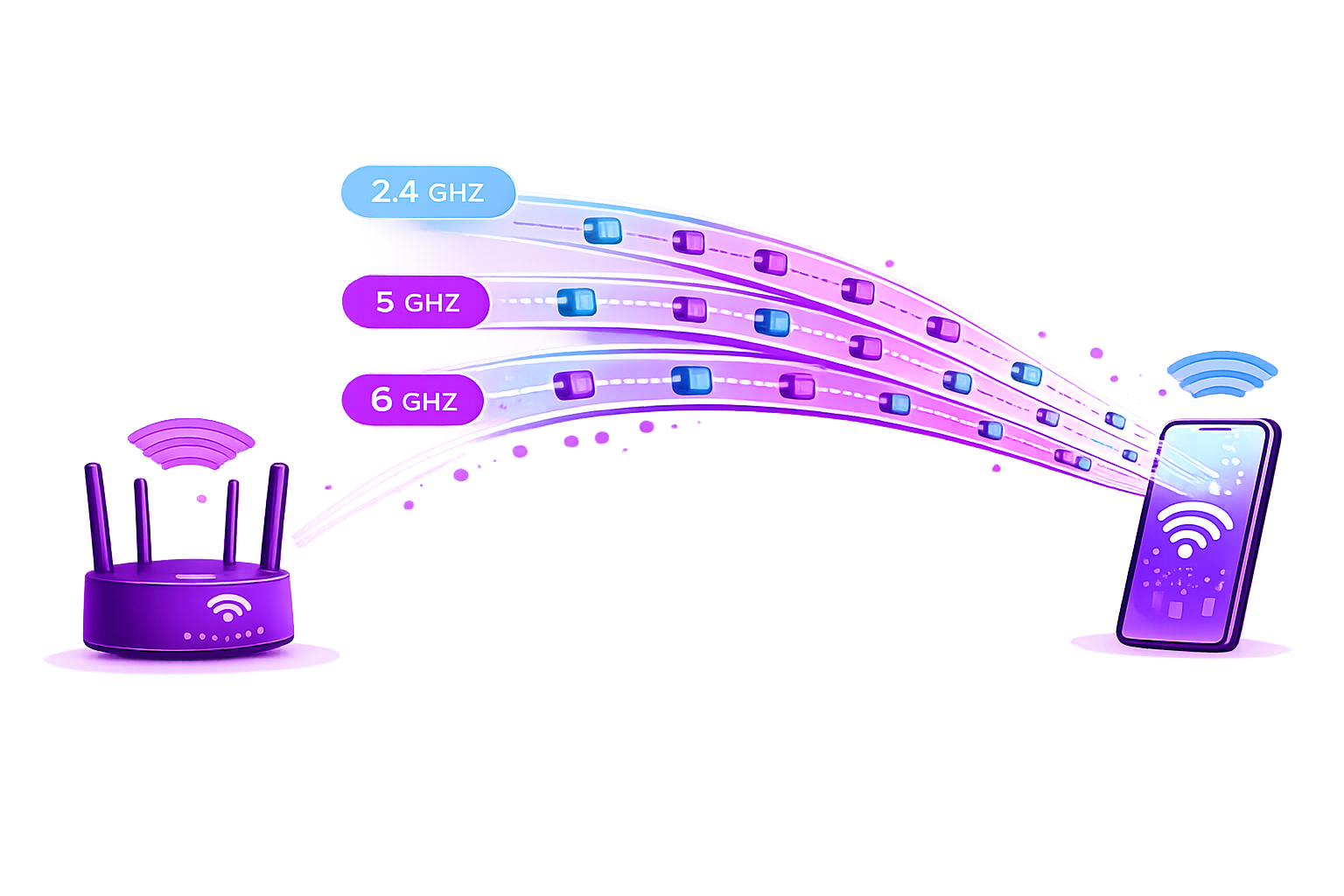
Multi-Link Operation, or MLO, is arguably the most significant feature of the Wi-Fi 7 standard. In previous generations of Wi-Fi, even if your router supported multiple frequency bands, your device could only talk to the router on one band at a time. It was like driving a car on a massive three-lane highway but being legally restricted to staying in just one lane for your entire trip, regardless of traffic congestion in that specific lane. MLO changes this by allowing a single device to send and receive data across multiple links—such as the 5 GHz and 6 GHz bands—at the exact same time. This helps provide a massive boost in throughput and reliability because the device no longer has to wait for one band to clear up before sending more data. This technology is designed to improve how we interact with our most data-hungry devices, making the transition between bands invisible and nearly instantaneous.
The technical brilliance of MLO lies in its ability to aggregate bandwidth across the spectrum. When a device is "multi-link capable," it can treat the different frequency bands as a single, unified pool of resources. If the 5 GHz band is momentarily busy with a large file download on another device, your smartphone or laptop can almost instantly shift its real-time video call data to the 6 GHz band. This capability is managed by the hardware almost instantly, helping ensure that you never notice the handoff. For households that demand high performance, this means the network can adapt to your needs in real-time, rather than having to troubleshoot connection issues. It effectively helps minimize the potential for bottlenecks that used to plague older wireless standards during high-traffic periods. By utilizing multiple paths for data, Wi-Fi 7 helps provide a consistent experience even when the neighborhood airwaves are crowded with competing signals.
Core benefits of multi-link operation
- Simultaneous transmission: Devices can transmit and receive data on multiple frequency bands at once.
- Dynamic link switching: The network can shift traffic to the clearest available band almost instantly.
- Increased reliability: If one link experiences interference, the others help keep the connection stable and fast.
- Aggregated throughput: Combining multiple bands allows for much higher overall speeds than a single band could ever provide.
- Enhanced spectrum efficiency: Uses every bit of available airwaves to move data as quickly as possible.
How MLO helps manage high-demand households
The modern home is no longer just a place to live; it’s a high-tech hub that functions as a professional office, a digital classroom, a high-definition movie theater, and a competitive gaming arena. This transition has put an immense strain on traditional Wi-Fi networks that were never originally designed to handle dozens of high-bandwidth devices running at once. High-demand households often suffer from network congestion, where too many devices are competing for the same limited airwaves. MLO is specifically designed to alleviate this pressure by spreading the digital load more effectively across all available spectrum. When your network can use multiple links, it can separate low-priority traffic—like a smart thermostat's tiny data updates—from high-priority traffic like a 4K livestream or a critical work presentation. This intelligent routing ensures that the activities that matter most receive the resources they need.
This intelligent management helps minimize the potential for bottlenecks at the router level. In a household with multiple people, everyone expects their device to work at peak performance without interfering with anyone else's online experience. Wi-Fi 7 and MLO help provide the capacity to meet these expectations by efficiently distributing data in a way that older technology simply cannot match. This is particularly important for activities that are highly sensitive to timing, such as online gaming or video conferencing. By having multiple "paths" available for every device, MLO helps ensure that your most important packets of information don't get stuck behind a background system update or a large download on another machine. It creates a more harmonious digital environment where everyone can do what they love without compromise. This enhanced online experience is a direct result of how Wi-Fi 7 reimagines the relationship between the router and the client device for the modern era.
Impact of Wi-Fi 7 on household activities
| Activity | Benefit of Wi-Fi 7 and MLO |
| 4K/8K streaming | Helps minimize excessive buffering by using multiple data paths for large files. |
| Online gaming | Helps provide low-latency internet performance for competitive and casual play. |
| Remote work | Helps ensure crystal-clear video calls even when multiple people are online. |
| Smart home | Supports a wide range of connected devices without slowing down primary hardware. |
| Cloud backups | Enables fast uploads of large media files without interrupting other users. |
The role of frequency bands: 2.4 GHz, 5 GHz, and 6 GHz
To understand why MLO is so transformative for the average home, we have to look at the radio spectrum it operates in. Wi-Fi typically uses three distinct frequency bands: 2.4 gigahertz (GHz), 5 GHz, and now the expansive 6 GHz band. Each has its own unique strengths and characteristics. The 2.4 GHz band is excellent at traveling through walls and solid objects but is often slow and very crowded due to its limited number of available channels and interference from household appliances. The 5 GHz band is much faster and can carry more data but has a shorter range and struggles more with physical obstructions. The 6 GHz band, introduced with Wi-Fi 6E and expanded with Wi-Fi 7, is like a wide-open superhighway with almost no traffic. The Federal Communications Commission opened up this spectrum to allow for the next generation of wireless innovation, providing a massive new area for devices to operate without traditional interference.
Wi-Fi 7 uses these bands more efficiently than any previous standard by treating them as a single, flexible resource that can be utilized as needed. While older routers might have struggled to decide which band was "best" for your phone at any given second, Wi-Fi 7 simply uses whatever is available and fastest across all three bands. The 320 MHz (megahertz) channels available in the 6 GHz band are twice as wide as what was available in Wi-Fi 6, which can translate to significantly more data being moved at nearly the speed of light. This wider bandwidth is what allows for multi-gig speeds in select locations of up to 2 Gig, up to 3 Gig, and even up to 8 Gig. By managing all three bands through MLO, your home network becomes a highly flexible and powerful tool that adapts to your physical environment and your specific usage patterns in real-time.
Understanding the three Wi-Fi bands
- 2.4 GHz: This band is designed for long-range connectivity and simple smart home devices that don't require high speeds.
- 5 GHz: This band provides an excellent balance of speed and range for most modern electronics and streaming needs.
- 6 GHz: This is the ultra-fast, low-interference lane intended for the most high-bandwidth and latency-sensitive tasks.
- Tri-band management: Wi-Fi 7 MLO coordinates all three bands simultaneously to help provide the best possible performance for every device.
Reducing latency for a smooth digital experience
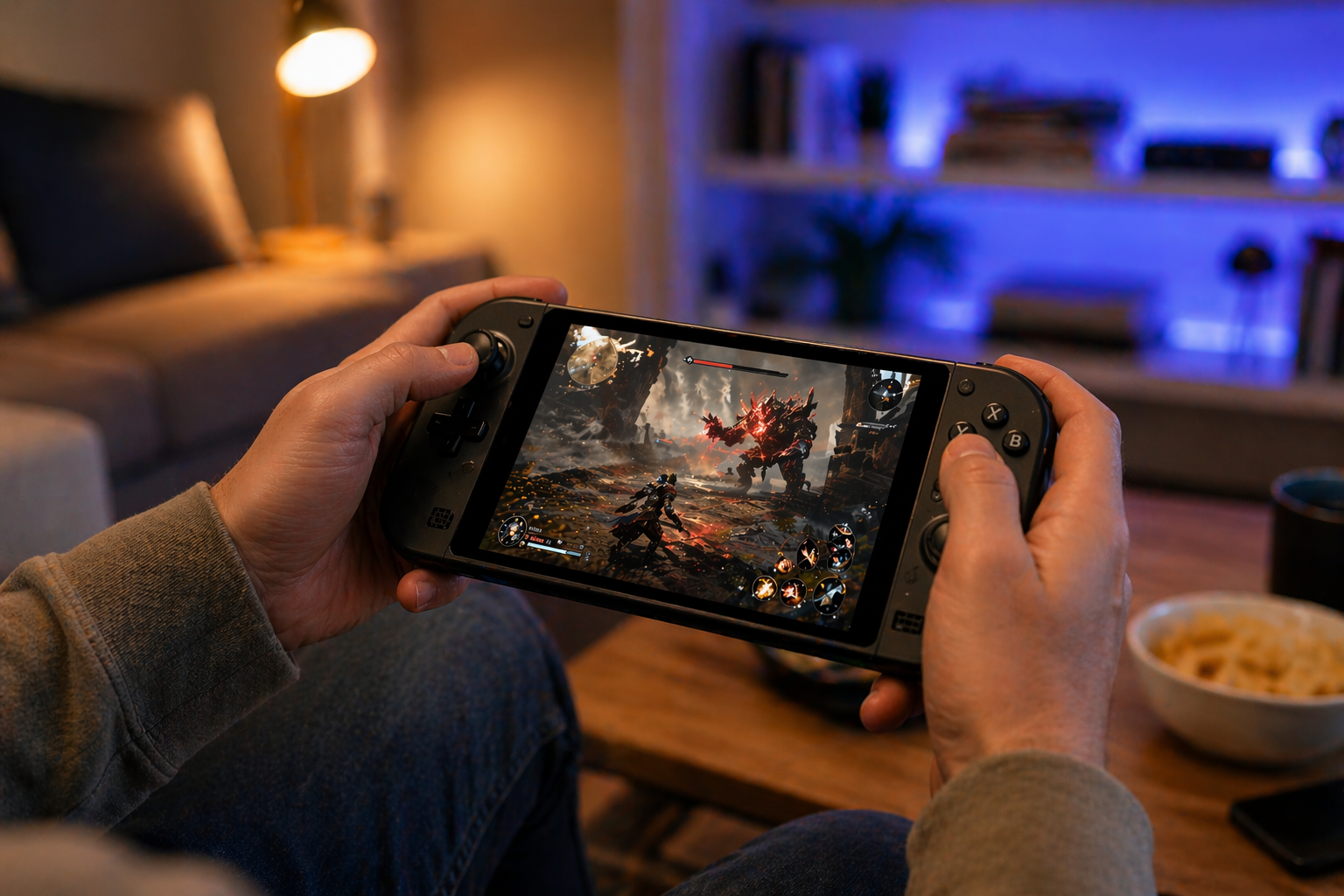
For many users, "speed" isn't just about how fast a large file downloads; it's also about latency, or the time it takes for a signal to travel from your device to the server and back again. High latency results in "lag," which is the ultimate enemy of gamers and remote workers alike. Wi-Fi 7 is designed to provide low-latency internet performance, often bringing in-home response times down to unprecedented levels that were once only possible with a wired connection. MLO plays a critical role here because it drastically reduces the time a device has to wait to find a clear channel. Instead of waiting for its turn on one specific band, it can jump onto any available link almost instantly, helping ensure that your inputs are registered with minimal delay.
This responsiveness makes a tangible, day-to-day difference in your digital life. When you are on an important video call, low-latency performance helps minimize those awkward moments where people talk over each other because of a half-second delay in the audio transmission. For gamers, it provides a vital competitive edge, where every reaction and movement is captured and sent to the game server almost instantly. This focus on real-time connectivity is what truly sets Wi-Fi 7 apart from its predecessors. It is built for a world where we don't just consume content, but interact with it in real-time through cloud-based services. Whether it's exploring virtual reality (VR), using augmented reality (AR) for work, or just participating in a high-stakes business meeting, the low-latency design of Wi-Fi 7 helps keep your experience smooth, consistent, and virtually uninterrupted.
How Wi-Fi 7 helps reduce lag and latency
- Packet duplication: MLO can send the exact same data over two different bands to help ensure the fastest one gets through first.
- Preamble puncturing: This technology allows Wi-Fi 7 to "carve out" specific interference in a channel and use the remaining clear space.
- 320 MHz channels: Significantly wider channels allow for more data to be processed without a queue forming at the router.
- 4096-QAM modulation: This advanced technique helps pack more data into each individual signal for enhanced overall efficiency.
- Intelligent traffic steering: Automatically moves sensitive data to the least congested path available.
Future-proofing your home with the Quantum Fiber Wi-Fi 7 pod
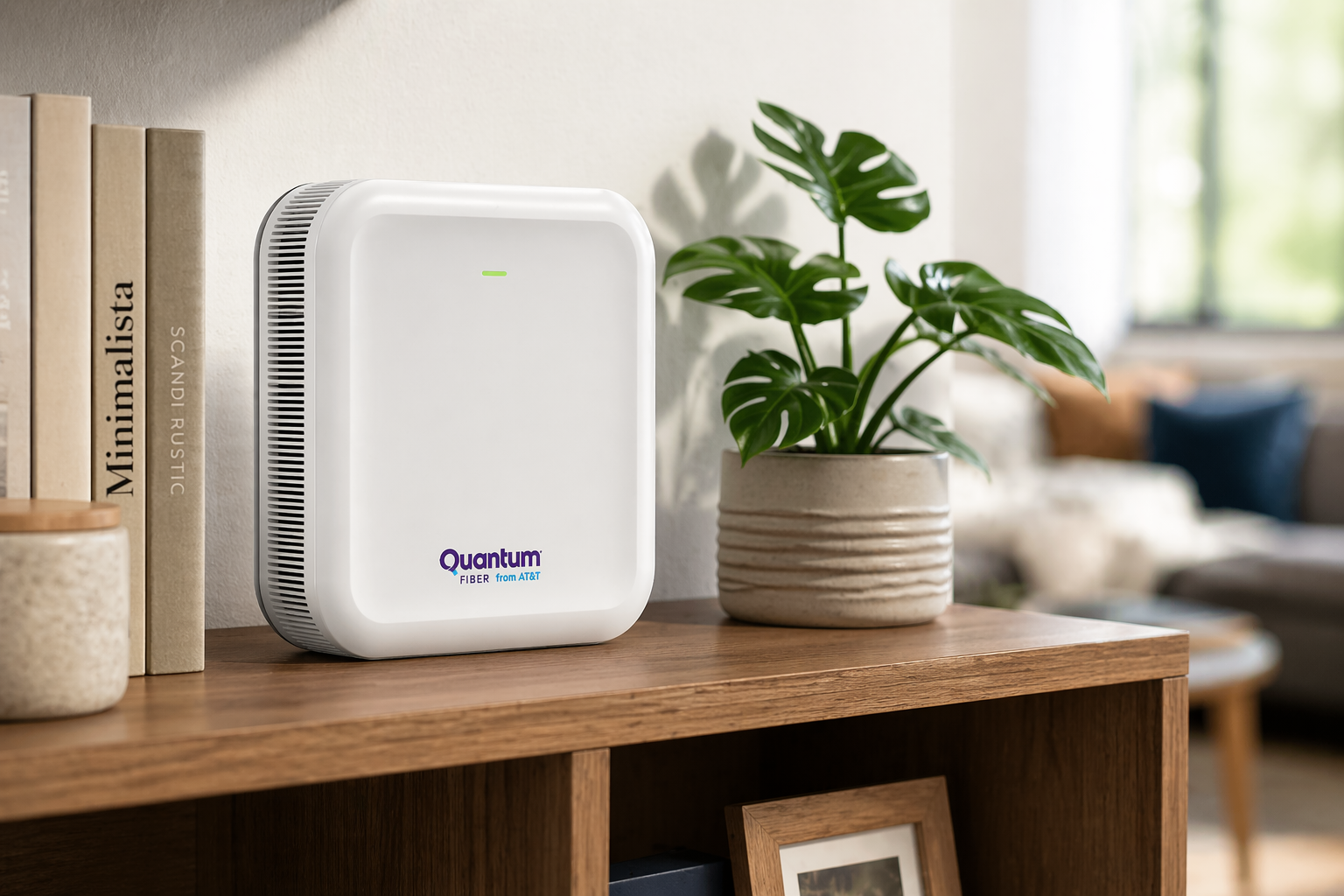
Investing in Wi-Fi 7 isn't just about solving today's connectivity problems; it's about preparing your household for what's coming next. As we continue to add more smart devices and apps that require even more bandwidth, having a future-proof fiber-optic technology foundation becomes essential. Quantum Fiber provides advanced Wi-Fi technology powered by Wi-Fi 7, featuring a high-performance pod that is designed to provide approximately 25% greater coverage than previous generations. This means you can enjoy a consistent connection in more areas of your home using just a single piece of hardware. With the Quantum Fiber app, you also get total control over your network, including parental controls and device prioritization, allowing you to manage your high-demand household with absolute ease.
When your Quantum Fiber service is being installed, a technician will help set up your equipment, which includes the hardwired Wi-Fi pod (what many people commonly call "the router"). This single pod is a powerhouse, typically capable of covering up to approximately 4,000 square feet, depending on your home's layout and construction. Because the technology is so efficient, many households will find that this single point of access provides the whole-home Wi-Fi experience they need without the complexity of additional hardware. Because there is no annual contract and no data caps, you have the freedom to use your internet as much as you need. Whether you are a professional gamer, a digital content creator, or a large family with dozens of connected devices, the Quantum Fiber Wi-Fi 7 pod provides the reliable, high-speed foundation you need to move at nearly the speed of light.
Why choose Quantum Fiber Wi-Fi 7 for your home
- Next-gen Wi-Fi 7 equipment: Get hardware designed specifically for high-capacity and high-demand environments.
- Expansive coverage: A single pod is designed to provide up to 4,000 square feet of reliable signal.
- Simple setup: One powerful device often covers the entire home, simplifying your networking footprint.
- No annual contract: Enjoy the freedom of a premium service that doesn't lock you into long-term commitments.
- Quantum Fiber app: Take control of your network with intuitive, easy-to-use tools for security and device management.
Secure by design: Built-in cybersecurity features help protect your network from viruses and malware.
Embracing the next generation of home connectivity

The multi-link revolution is more than just a technical milestone; it is the key to unlocking a truly seamless digital lifestyle for the modern era. By fundamentally changing how data moves through our homes, Wi-Fi 7 and MLO help provide the reliability and speed needed for a world that never stops moving. From the low-latency internet performance required for professional gaming to the high-capacity bandwidth needed for a house full of smart devices, this technology is designed to support you. As we look toward a future filled with 8K streaming, immersive VR, and even more connected innovations, having a network that can adapt is no longer a luxury. It is a vital part of staying connected to what matters most.
Quantum Fiber is proud to offer the advanced Wi-Fi technology and symmetrical speeds on most plans that make this future possible today. With no annual contract and a focus on 99.9% reliability (based on network uptime or availability), you can feel confident that your home is future. Are you ready to see how the next generation of internet can transform your home? You can check for service in your area and discover how Wi-Fi 7 can empower your high-demand household with just a few clicks. The possibilities are nearly endless when your internet is designed to move as fast as you do.
How will a more responsive and reliable home network change the way you work, play, and connect with the world around you?
Frequently asked questions on Wi-Fi 7 and MLO
What is multi-link operation (MLO)?
MLO is a core feature of Wi-Fi 7 that allows a device to connect to multiple frequency bands—like 5 GHz and 6 GHz—at the same time. This helps provide better stability, higher speeds, and much lower latency compared to older Wi-Fi versions that could only use one band at a time.
Do I need new devices to use Wi-Fi 7?
While Wi-Fi 7 is backward compatible and will work with all your current devices, you will need Wi-Fi 7-capable hardware (like a new smartphone or laptop) to take full advantage of features like MLO and the highest possible speeds.
How does Wi-Fi 7 help with gaming?
Wi-Fi 7 helps provide low-latency internet performance, which can help reduce lag during online play. By using MLO to find the fastest available path for data, it helps ensure that your gaming traffic isn't delayed by other devices in your home.
Will one Wi-Fi 7 pod cover my entire house?
The Quantum Fiber Wi-Fi 7 pod is designed to provide up to approximately 4,000 square feet of coverage. For many standard-sized homes, this single pod is all that is needed to help ensure a reliable, high-speed connection in every room.
Can I manage my Wi-Fi 7 network from my phone?
Absolutely. With the Quantum Fiber app, you can monitor your network, set up parental controls, prioritize specific devices, and even pause the internet. This gives you control over how your household stays connected.
Content Disclaimer - All content is for informational purposes only, may require user’s additional research, and is provided “as is” without any warranty, condition of any kind (express or implied), or guarantee of outcome or results. Use of this content is at user’s own risk. All third-party company and product or service names referenced in this article are for identification purposes only and do not imply endorsement or affiliation with Quantum Fiber. If Quantum Fiber products and offerings are referenced in the content, they are accurate as of the date of issue. Quantum Fiber services are not available everywhere. © 2026 AT&T Intellectual Property. AT&T and the Globe logo are registered trademarks of AT&T Intellectual Property. All other marks are the property of their respective owners.