

Quick summary: Unreliable Wi-Fi can cost small businesses significantly through lost productivity, abandoned transactions, and damaged customer trust. Modern digital infrastructure requires consistent connectivity to support cloud-based operations and seamless payment processing. Investing in reliable network technology helps minimize the financial drain caused by frequent connection drops and excessive buffering.
Running a small business often feels like a masterclass in juggling. On any given day, you are the CEO, the lead technician, the customer service representative, and occasionally the person who needs to fix the office coffee machine. However, there is one silent partner in your business that can either be your greatest asset or your most frustrating liability: your wireless network. We live in an era where digital infrastructure is no longer a luxury but a fundamental utility. When the connection falters, the momentum of your entire day can grind to a halt. Whether you are running a retail boutique, a bustling café, or a professional consultancy, the impact of a weak signal stretches far beyond a slow-loading webpage.
Many entrepreneurs view internet service as a simple line item on a budget, often choosing the most accessible option without considering the long-term implications. But what happens when that service fails during a peak sales hour? What is the true price of an employee spending twenty minutes trying to rejoin a video call? The answers to these questions reveal the hidden financial leakages that can quietly undermine your bottom line. This article is designed for the modern resident business owner who wants to move beyond reactive troubleshooting and understand how to build a foundation for progress. We will explore the tangible and intangible costs of poor connectivity and provide insight into how you can help protect your business from the "digital tax" of unreliable service. Quantum Fiber® from AT&T, is built for this modern reality, offering the stability that helps keep operations moving.
Key takeaways
Understanding the ripple effect of poor internet can help you make smarter decisions for your business's future.
- Productivity leaks: Small delays in loading cloud-based tools add up to significant lost labor hours over a fiscal year.
- Customer retention: Inconsistent Wi-Fi at the Point of Sale (POS) can lead to abandoned carts and negative brand perceptions.
- Security vulnerabilities: Unstable networks can lead to failed security updates, leaving your digital assets exposed to cyberthreats.
- Operational resilience: High-performance connectivity is the backbone of modern automation and remote collaboration.
Why Wi-Fi systems become unreliable
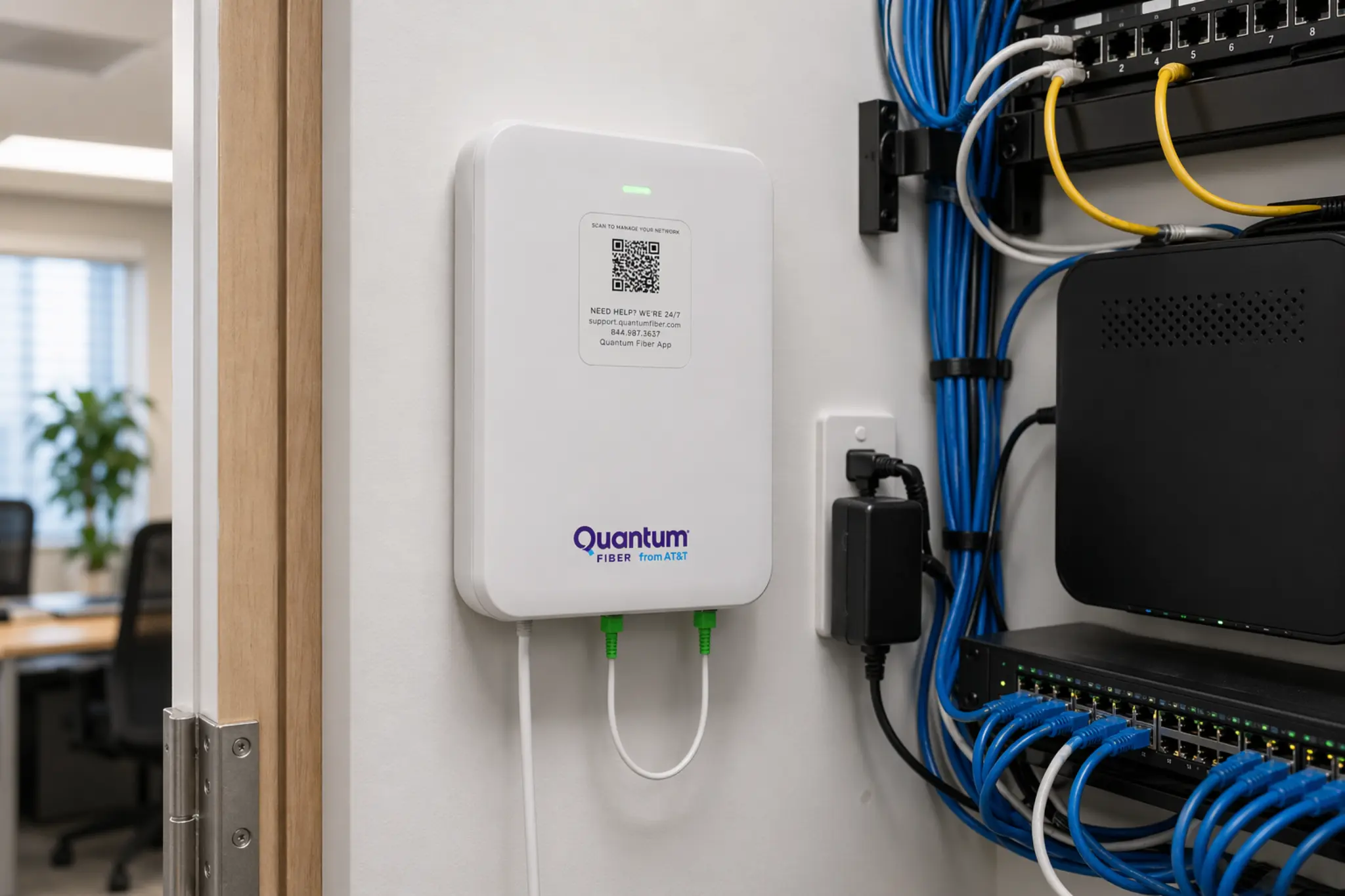
Understanding why a connection fails is the first step toward fixing it. Unreliable Wi-Fi is rarely the result of a single issue; it is often a combination of environmental, technical, and external factors that create a "perfect storm" for connectivity drops. Physical obstructions are a primary culprit in many small business settings, where architectural choices often conflict with radio wave propagation. Materials such as concrete, brick, and metal can significantly weaken radio signals as they travel from the hardware to your devices. Additionally, electronic interference from other wireless equipment can create significant "noise" that disrupts your data stream. When these physical and environmental barriers exist, your team may experience dropped connections even if they are only a few rooms away from the hardware.
External service problems and environmental conditions also play a major role in network instability, and many people forget that sometimes the Wi-Fi feels "broken" simply because there is an ISP outage. If the provider's larger network goes down due to a local hub failure or maintenance issues, your internal Wi-Fi signal might look strong, but it has nowhere to go. Severe weather events also put stress on the physical infrastructure delivering your connection. Extreme heat can cause outdoor utility cabinets to overheat, while heavy rain or humidity can seep into old copper wiring hubs used by some providers, causing corrosion. One important consideration is the placement of your network equipment. While some providers may give you the option to have equipment installed outside or inside, placing critical hardware like the primary fiber wall unit (the box where the fiber line connects to your business) inside helps protect it from these stressors.
| Unreliability factor | Root cause | Business impact |
| Physical barriers | Concrete walls and metal shelving | Weakened signal strength in remote corners |
| External outages | ISP network failures or hub maintenance | Complete loss of connectivity despite strong signal |
| Weather events | Heat, moisture, and lightning strikes | Hardware overheating or corroded legacy lines |
| Hardware age | Outdated router processing power | Inability to support multiple connected devices |
To help you stay ahead of these issues, perform a quick connection health check to see where your network might be failing.
Quick connection health check
- Check your placement: Ensure your hardwired Wi-Fi pod is in a central location and not hidden behind metal cabinets or thick concrete walls.
- Identify the source: If you lose connection, check if other nearby businesses are also down; this can help you determine if the issue is a building-specific problem or a larger ISP outage.
- Audit your devices: Identify how many devices are connected simultaneously during peak hours; older hardware may struggle with more than ten active connections.
- Test the range: Walk to the furthest point of your office and check for signal drops; if the connection is weak, you may need additional pods to help provide better coverage.
To combat these challenges, many businesses are turning to advanced technology powered by Wi-Fi 7. This next-generation standard is designed to provide approximately 25% greater coverage than Wi-Fi 6, helping your signal reach through the physical complexities of your workspace. By utilizing smarter signal routing and broader frequency bands, Wi-Fi 7 helps minimize interference and provides a more stable foundation for high-bandwidth activities.
The impact on employee productivity and morale
Employee productivity is often the first casualty of an unreliable network. In a world where almost every critical business tool—from project management software to accounting platforms—lives in the cloud, a drop in connectivity is equivalent to a power outage. When your team members have to wait for screens to refresh or experience excessive buffering during virtual meetings, it breaks their cognitive flow and slows down the entire department. It is not just about the five minutes lost during the outage; it is about the ten minutes it takes for them to find their place again and regain focus on the task at hand. Over time, these micro-interruptions create a culture of frustration and a feeling that the company is not properly equipped for modern demands. Staff members who feel they cannot do their jobs effectively due to technical limitations often experience a dip in morale, which can eventually lead to higher turnover rates and difficulty attracting top-tier talent.
| Connectivity factor | Impact on productivity | Long-term business risk |
|---|---|---|
| Excessive buffering | Delayed access to cloud documents | Missed deadlines and project stalls |
| Dropped video calls | Disrupted internal communication | Fragmented team collaboration |
| Slow file uploads | Bottlenecks in content sharing | Reduced agility in responding to clients |
| Inconsistent signal | Frequent task switching and restarts | Employee burnout and technical frustration |
Building a high-performance environment means providing the tools that help ensure reliable performance throughout the workday, regardless of the task. When your digital infrastructure is designed to support high-bandwidth activities, your team can spend less time troubleshooting and more time innovating and serving your customers. This shift from "fixing the Wi-Fi" to "growing the business" is essential for any enterprise looking to stay competitive in an increasingly fast-paced market. When employees trust that their tools will work, they can lean into their creative and strategic tasks without the lingering anxiety of a system crash.
Why consistent bandwidth matters
A high-performance network is not just about raw speed; it is about the ability to handle multiple tasks at once without a dip in quality. When your connection is designed to help maintain performance across several devices, your staff can upload large presentations while another team member conducts a high-definition video call without interference. This lack of friction allows for a more fluid workday, where the technology serves as a background enabler rather than a primary obstacle. By removing the guesswork from connectivity, you empower your team to operate at their highest potential without the fear of a sudden drop in signal or an unexpected delay in their workflow. This level of consistency can be what separates a modern, agile business from one that is constantly playing catch-up with its own technology.
Lost revenue at the Point of Sale

For retail and hospitality businesses, the Point of Sale (POS) is the most critical link in the revenue chain, where technical failure translates directly into lost income. Today’s customers expect a frictionless checkout experience, often favoring contactless payments and mobile wallets for their daily purchases. These systems require a constant, stable connection to process transactions almost instantly, ensuring the customer can complete their journey with ease. When the Wi-Fi is unreliable, the checkout process slows down, leading to longer lines and impatient shoppers who may second-guess their purchase. In the worst-case scenario, a complete network drop or an ISP outage can make it impossible to accept credit cards at all, forcing businesses to rely on cash-only transactions that many modern shoppers simply cannot perform. Industry data from sources like Gartner suggests that even a few minutes of downtime can translate into thousands of dollars in lost revenue for businesses that rely on high-volume transactions during peak hours.
- Abandoned purchases: Customers are less likely to wait if they see a line is not moving due to technical glitches or slow processing.
- Failed upselling: Slow systems prevent staff from quickly checking inventory or adding last-minute items to a digital cart during the conversation.
- Manual error: When the automated system fails, staff may resort to manual entry, which can help increase the likelihood of accounting mistakes and inventory discrepancies.
- In-store experience: A laggy network can affect digital signage and background music, disrupting the overall ambiance and reducing the time customers spend in the store.
Modern payment processing is built on the premise of speed and reliability. If your network cannot keep up with the pace of your customers, you are essentially leaving money on the table every single day. Investing in a network that helps minimize the potential for bottlenecks at the register is a direct investment in your daily cash flow and your long-term financial stability. This ensures that even on your busiest days, your technology remains an invisible partner in your success rather than a visible obstacle to your profits.
Minimizing transactional friction
Friction at the register is more than just an inconvenience; it is a direct signal to your customers about your operational health and attention to detail. When a payment processes in seconds, it reinforces a sense of professionalism and helps ensure the customer leaves with a positive impression. Conversely, if a customer has to wait through multiple retry attempts, they may begin to question the security and reliability of your business as a whole. A stable network helps ensure that every tap, dip, or swipe is handled with precision and speed, helping maintain the momentum of your sales floor even during your busiest seasonal rushes. This reliability helps build a customer base that knows they can rely on you for a quick and efficient experience every time they visit.
The erosion of customer trust and brand reputation
Reputation is a fragile asset for a small business, often built over years but vulnerable to sudden changes in customer expectations. In a digital-first economy, your brand is often defined by the convenience you offer and how easily you allow people to connect with their world while in your space. If you provide guest Wi-Fi that is consistently slow or difficult to join, it sends a message that your business is not keeping up with modern standards or prioritizing the customer experience. Customers who visit your establishment to work, socialize, or simply wait for a service expect a certain level of connectivity that feels seamless. When they encounter dead zones, constant disconnects, or even the frustration of an ISP outage that leaves them stranded, they may not complain to you directly; instead, they might simply choose not to return or mention the frustration to their peers. Word of mouth travels fast, and a single negative review mentioning "bad Wi-Fi" can deter potential clients who were looking for a reliable place to spend their time and money.
Maintaining a professional image requires a network that is as reliable as the service you provide in person. Think of your Wi-Fi as a digital welcome mat; if it is worn out and full of holes, it reflects poorly on everything else you do, from your product quality to your customer care. By focusing on a whole-office coverage strategy, you can help ensure a consistent experience for everyone who walks through your door, regardless of where they sit. This helps protect your reputation and positions your business as a modern, tech-forward destination that understands the needs of the modern consumer.
- Digital first impressions: Often, a customer's first interaction with your business is through your guest network portal.
- The "work from anywhere" crowd: Many professionals choose where to spend their money based on the quality and reliability of the available internet.
- Social media amplification: Customers love to share their experiences in real-time; a fast connection makes it easy for them to tag your business in a post.
- Long-term loyalty: Reliability breeds trust, and trust is the foundation of repeat business and community advocacy.
Cybersecurity risks and data vulnerability
Many business owners overlook the connection between network reliability and security, viewing them as two entirely separate issues. An unstable connection can interrupt critical background processes, such as automated cloud backups and security software updates that are vital for network health. When these updates fail to complete due to a signal drop, your devices are left vulnerable to the latest cyberthreats and malware. According to the Federal Trade Commission, small businesses are frequent targets for cyberattacks because they often lack the robust defenses of larger corporations and may have overlooked simple digital hygiene. An unreliable Wi-Fi signal can also tempt employees or guests to use unsecured personal hotspots to bypass connectivity issues, which can further expose your private business data to malicious actors who are looking for easy points of entry.
- Failed patches: Critical security updates for your POS or computers might not download if the connection is intermittent or dropping frequently.
- Data corruption: Interruptions during cloud syncing can lead to corrupted files or lost customer records that are difficult to recover.
- Encrypted signals: Modern routers use advanced encryption to help secure your network, but these features perform best on a stable, high-performance line.
- IoT protection: Smart devices like security cameras and smart locks require constant connectivity to help protect your physical premises and provide real-time alerts.
A secure business starts with a stable network foundation that you can trust to stay online 24/7. By choosing a solution designed for high-capacity environments, you can help safeguard your connected devices and help maintain the integrity of your sensitive information. This helps prevent the devastating costs associated with a data breach, which can include legal fees, lost proprietary files, and a permanently damaged reputation in your local community. When your infrastructure is solid, you can focus on your core mission with the peace of mind that your digital assets are well-guarded.
A foundation for progress and momentum

The hidden costs of unreliable Wi-Fi are a burden that no small business should have to carry. When you move past the frustrations of lagging connections and inconsistent signals, you open the door to true progress and long-term momentum. At Quantum Fiber, we believe in providing internet built for what’s now and what’s next, empowering you to lead your industry with confidence. Our fiber-optic technology is designed to move data at nearly the speed of light, providing a stable foundation for your digital ambitions. With 99.9% reliability, based on network uptime or availability, you can spend your energy on your customers rather than your connectivity issues.
We offer a range of plans to meet your specific needs, from our plan with speeds of up to 500 Mbps to our multi-gig internet plans in select locations of up to 2 Gig, up to 3 Gig, and up to 8 Gig. Our service is built on transparency and freedom, featuring no annual contract and no data caps to slow you down. When you choose Quantum Fiber, your service is powered by advanced Wi-Fi technology featuring Wi-Fi 7, which helps provide approximately 25% greater coverage throughout your workspace than Wi-Fi 6. Our system includes a hardwired Wi-Fi pod (what many people commonly call the router) and additional pods to help minimize dead spots in larger or more complex layouts.
Quantum Fiber helps connect your business to the tools and people that matter most, helping you build a future that is unhindered by technical limitations. Whether you are managing complex cloud workflows or simply helping ensure your customers can pay with ease at the register, our fiber-optic network is built to support your growth. Are you ready to see how a more reliable connection could transform your daily operations and help you regain lost productivity? Check for service in your area today and discover how the right digital infrastructure can help your small business thrive in a connected world. What could your team achieve with a network that actually helps keep up with their ambition?
Frequently asked questions on unreliable Wi-Fi costs
How can I calculate the actual cost of Wi-Fi downtime for my business?
To find the cost, you should look at your average hourly revenue and the hourly wage of your staff. If your internet is down for one hour, you lose that revenue and pay for idle labor. You should also consider the "recovery time"—the period it takes for employees to get back to full speed once the connection returns.
Does a slow connection really impact security?
Yes. A slow or dropping connection can prevent your firewall and antivirus software from downloading the latest threat definitions. It can also cause cloud backups to fail, meaning if you ever need to recover data after an attack, your most recent files might not be there.
Is it worth upgrading to a professional-grade router for a small office?
In many cases, yes. Consumer-grade hardware is often not designed to handle the number of simultaneous connections a business requires. Moving to advanced Wi-Fi technology can help minimize dead spots and help provide a more consistent signal for multiple users.
What is the difference between symmetrical speeds and traditional internet?
Symmetrical speeds provide equal performance for both downloading and uploading data. This is particularly important for businesses that use video conferencing, upload large files to the cloud, or run multiple VoIP lines, as it helps maintain a smooth experience for both sending and receiving information.
Will better Wi-Fi really improve my customer reviews?
For cafes, hotels, or waiting rooms, reliable guest Wi-Fi is a top priority for customers. Providing a fast, seamless connection removes a common pain point and can help lead to higher satisfaction scores and more positive mentions in online reviews.
Content Disclaimer - All content is for informational purposes only, may require user’s additional research, and is provided “as is” without any warranty, condition of any kind (express or implied), or guarantee of outcome or results. Use of this content is at user’s own risk. All third-party company and product or service names referenced in this article are for identification purposes only and do not imply endorsement or affiliation with Quantum Fiber. If Quantum Fiber products and offerings are referenced in the content, they are accurate as of the date of issue. Quantum Fiber services are not available everywhere. © 2026 AT&T Intellectual Property. AT&T and the Globe logo are registered trademarks of AT&T Intellectual Property. All other marks are the property of their respective owners.