
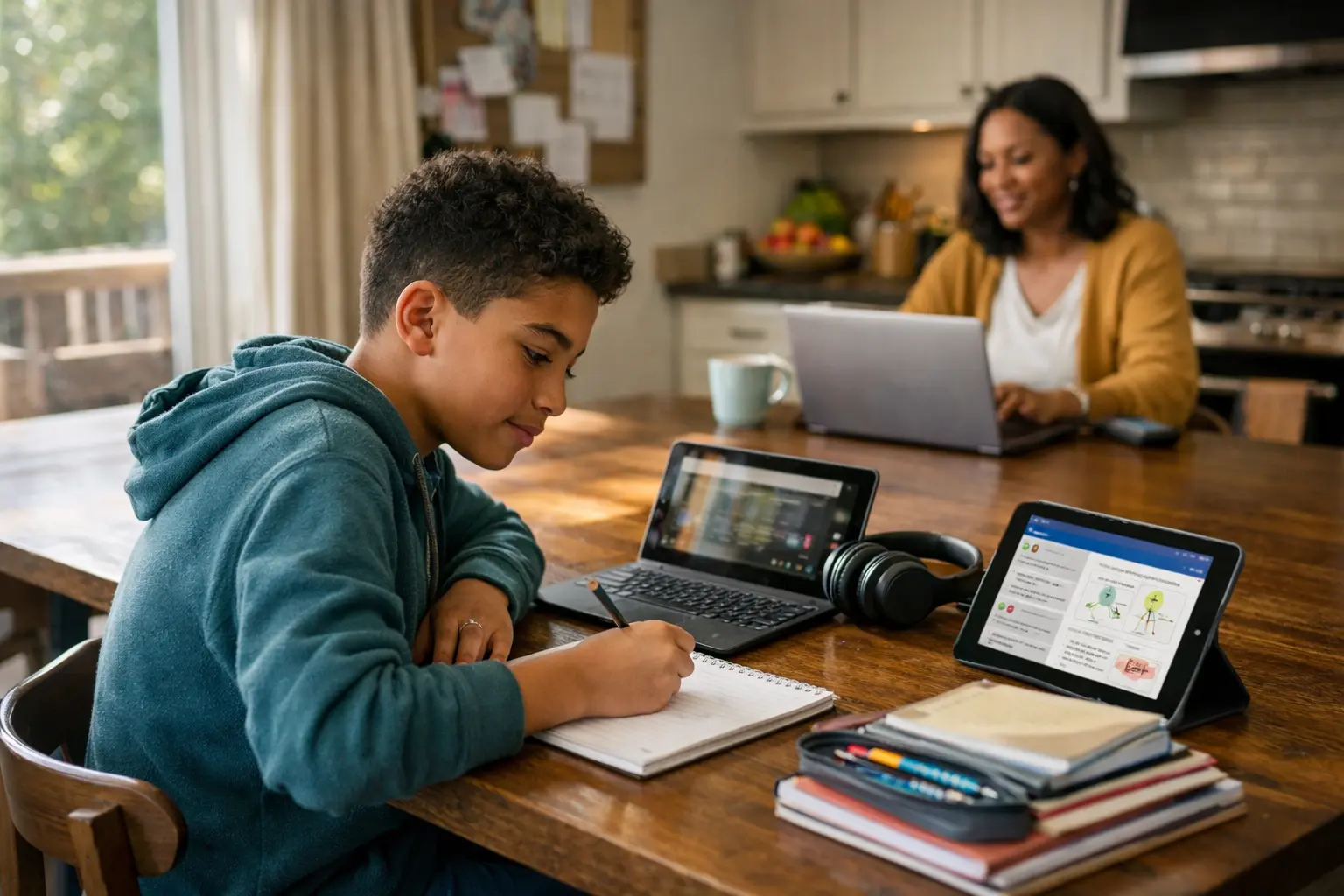
Education has shifted significantly since the COVID-19 pandemic. Hybrid learning is now front and center as an effective way to personalize the student experience rather than simply being a backup plan when students can’t gather in person.
What is hybrid learning? It’s a blend of in-person instruction and online education. For most schools in the U.S., hybrid learning began during the COVID-19 pandemic and has become a permanent staple in many ways. College lectures have become available online, tutoring and group work are conducted via Zoom, and in-person classes can be held as “virtual days” during inclement weather. The benefits of hybrid learning include increased learner engagement, personalized learning, and flexible scheduling.
Maximizing hybrid learning can be difficult with slow internet. Lag during collaborative remote sessions can be especially frustrating for parents who set up extra classes, tutoring sessions, and software to enhance their child’s education experience.
But your child’s potential doesn’t have to be limited by your internet ping rate. Fiber internet empowers the latest developments in hybrid learning to give your child a front-row seat right from home.
The rise of the AI tutor: Personalized learning at scale
Gone are the days of tracking down local tutors, scheduling appointments, and meeting at the library to give your kids extra academic support. Now, generative AI is leading a new era of customizable education, and research shows benefits like improved learning gains and higher levels of motivation.
AI agents like Khanmigo and ChatGPT4Kids provide students with instant feedback on essays, math problems, and coding. They can also help with test prep, homework, and career coaching. While effective, these AI platforms are “Large Multimodal Models” that require a lot of data to operate smoothly. Some can even “see” and analyze a student’s handwritten work via camera and offer corrections in milliseconds. High-speed fiber internet is an essential part of keeping the conversation flow natural between the student and their AI tutor.
Collaborative labs: Shared digital workspaces
Hybrid learning isn’t just for solo tutoring. It’s also ideal for collaborative learning in the classroom and at home. And it works even better when fueled by high-speed fiber internet. For instance, interactive whiteboards allow groups of students to work on the same digital canvas from different locations. They’re great for tasks such as brainstorming on joint projects or collaborating on 3D models. When used with a fiber connection, students experience minimal lag for real-time results.
As kids narrow down their interests and dive deeper into potential college and career paths, high-performing cloud software can give them a competitive advantage when it comes time to apply to their dream school. Whether it’s specialized engineering tools like CAD software or creative design tools like Adobe, fiber keeps these programs running.
This kind of digital equity makes it easier for students to access specialized tools that set them up for future success. Additionally, most fiber plans give them symmetrical upload power so it’s just as easy to send work as it is to receive it.
Immersive presence: Clear video connections
Most hybrid learning models include video sessions that not only require high-speed internet but also lead to some unwanted physical side effects. “Zoom fatigue” is a real phenomenon that causes greater physical and neurological tiredness compared to in-person meetings.
The good news is that one of the major causes of Zoom fatigue is video lag. Audio drops, stuttering, and buffering all make it harder for the brain to interpret conversations, which increases cognitive load and student exhaustion. The solution? Internet that can help keep the connection going in real time.
Additionally, hybrid learning may be getting another video upgrade soon. Just as Zoom meetings used to be rare and are now the status quo, the next generation of video learning has arrived: spatial video and 8k holographic streaming. This new technology gives students an immersive experience, making it feel like their teacher is physically in front of them.
To ensure optimal performance, make sure your internet upload speed is at least 50 megabits per second (Mbps). That number jumps even more if you have multiple kids simultaneously attending high-definition classrooms. Fiber internet is the key to active participation without a “buffering” icon appearing.
Security and focus: The protected learning environment
Hybrid learning opportunities also mean more potential for distractions. Instead of staring out the window during class, kids can now open text messages, YouTube, and other apps when they should be doing schoolwork on their computer. In fact, two thirds of students say they get distracted while on digital devices for school. Instead of handing out consequences, create a framework that sets up your child for success.
Your fiber internet app should have parental controls to help. With Quantum Fiber® from AT&T, you have a mobile app that can help you prioritize “Educational Traffic” over gaming and streaming during school hours. You can also schedule “Deep Study” time and block social media alerts during those sessions.
These controls can also help keep your kids safe from inappropriate content while using the internet. Set age restrictions on their profiles within your internet app and regularly monitor their browsing history. Using this information as a conversation starter helps them feel comfortable coming to you if they come across a mature website or encounter cyberbullying.
Investing in the next generation
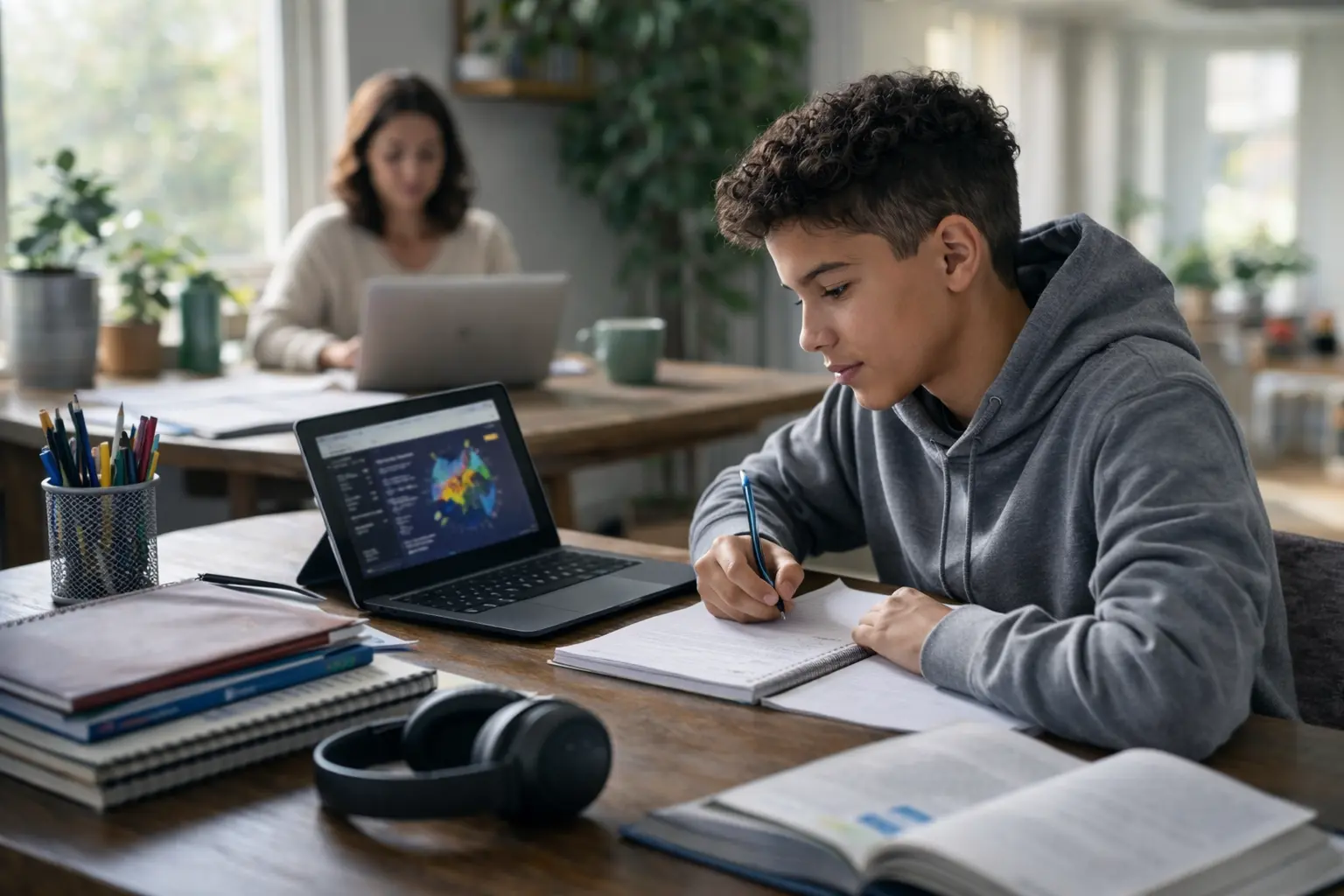
Connecting your home to world-class internet gives students a competitive edge in their academic and future professional careers. From becoming a digital native with the latest technology to accessing personalized education, a strong fiber connection is a must-have when hybrid learning is involved. Instead of your kids just keeping up with the curriculum, the power of fiber helps them exceed expectations and gain a better understanding of the world around them.
Ready to keep your kids connected with virtually no lag? Input your address to see if Quantum Fiber is available in your ZIP code.
Content Disclaimer - All content is for informational purposes only, may require user’s additional research, and is provided “as is” without any warranty, condition of any kind (express or implied), or guarantee of outcome or results. Use of this content is at user’s own risk. All third-party company and product or service names referenced in this article are for identification purposes only and do not imply endorsement or affiliation with Quantum Fiber. If Quantum Fiber products and offerings are referenced in the content, they are accurate as of the date of issue. Quantum Fiber services are not available everywhere. © 2026 AT&T Intellectual Property. AT&T and the Globe logo are registered trademarks of AT&T Intellectual Property. All other marks are the property of their respective owners.