

Have you ever wanted to step inside your favorite video game, try on a new pair of glasses without leaving your couch, or even walk through a digital version of a city thousands of miles away? This isn't just science fiction anymore; it’s the world of XR (Extended Reality).
XR is an umbrella term that covers some of the most exciting technologies available today. Whether you’re a parent looking for new educational tools for your kids, a gamer searching for the next big challenge, or a tech enthusiast curious about the future, understanding XR is the first step toward a whole new way of experiencing the digital world.
But there’s a catch. To make these digital moments feel real—what we call an immersive experience—the internet connection needs to do a lot of heavy lifting. In this guide, we’ll explore what XR really is, how it works, and why Quantum Fiber® is such an excellent fit for helping you explore these digital frontiers.
Key takeaways
- XR (Extended Reality) is a broad term that includes VR (Virtual Reality), AR (Augmented Reality), and MR (Mixed Reality).
- An immersive experience relies on high-fidelity visuals and low-latency (low-latency) response times to feel truly real.
- A high-speed, low-latency connection is essential for a smooth, virtually lag-free XR experience.
- Fiber internet helps provides the bandwidth and has symmetrical speeds on most plans handle the heavy data demands of XR.
- Quantum Fiber helps connect you to the future of digital interaction with 99.9% reliability, based on network uptime or availability.
- Professional installation helps ensure that the Wi-Fi equipment that acts as your main router is placed in the best possible location for whole-home coverage.
Jump to the sections that matter most to you
- Defining the world of extended reality
- The anatomy of a truly immersive experience
- Virtual reality: stepping into a new world
- Augmented reality: enhancing your physical space
- Mixed reality: where two worlds become one
- The data demands of digital immersion
- Why XR needs a robust internet connection
- The fiber advantage for immersive technology
- Advanced Wi-Fi technology and the role of Wi-Fi 7
- Getting your home ready for the XR revolution
- Professional installation and router placement
- Frequently asked questions about XR
- A future without limits
Defining the world of extended reality
XR sounds like something out of a futuristic movie, but it’s actually a very practical way to describe a range of technologies that change how we see and interact with the world. Think of XR as a big family. In this family, you have VR, AR, and MR. Each branch of the family tree offers a different way to blend what is real with what is digital, but they all share the common goal of expanding our senses beyond their natural limits.
At its core, XR is all about "immersion." It uses sensors, cameras, and screens to trick your brain into thinking that something digital is actually part of your physical environment—or that you’ve been transported somewhere else entirely. Whether it’s through a headset, a smartphone, or even specialized glasses, XR technology is designed to make the digital world feel as tangible as the one around us.
For families, this might mean a virtual field trip to the bottom of the ocean where everyone can see colorful coral reefs without getting wet. For students, it could mean practicing a chemistry experiment in a digital lab where nothing can spill or break, helping to provide a safe space for exploration. The possibilities are nearly endless, but many of them share one thing in common: they require a massive amount of data to move nearly at the speed of light from the internet to your device.
The anatomy of a truly immersive experience
To understand why XR is so special, we have to look at what makes an experience immersive. It isn't just about pretty pictures; it’s about a combination of sensory inputs that work together to convince your mind that you are "present" in a different space. This feeling of "being there" is the heart of an immersive experience.
Visual fidelity and depth
In a traditional video game, you look at a flat screen. In an immersive experience, the digital world has depth. This is achieved by showing two slightly different images to each of your eyes, mimicking how we see the real world. This requires double the visual data, which is why a high-speed connection is so vital for helping to maintain that illusion. If the resolution is too low, the digital world looks "blocky," and the immersive experience disappears. High resolution helps create a believable world that your eyes can accept as real.
Spatial audio
Immersive experiences also use spatial audio. This means if a digital bird chirps "behind" you in a VR headset, the sound actually seems to come from behind your head. This directional sound helps keep the experience feeling authentic. It requires precise synchronization with your movements, adding another layer of data that needs to be delivered virtually without a hitch. Spatial audio is often the unsung hero of immersion, as it grounds your ears in the same digital space as your eyes.
Low-latency interaction
Perhaps the most important part of immersion is how the world reacts to you. If you reach out to touch a digital object and there is a delay, the immersion is broken. Low-latency Internet helps ensure that your physical movements and the digital response happen almost instantly. Without this, the brain realizes it's looking at a simulation, which can lead to a less enjoyable experience and even physical discomfort.
Virtual reality: stepping into a new world
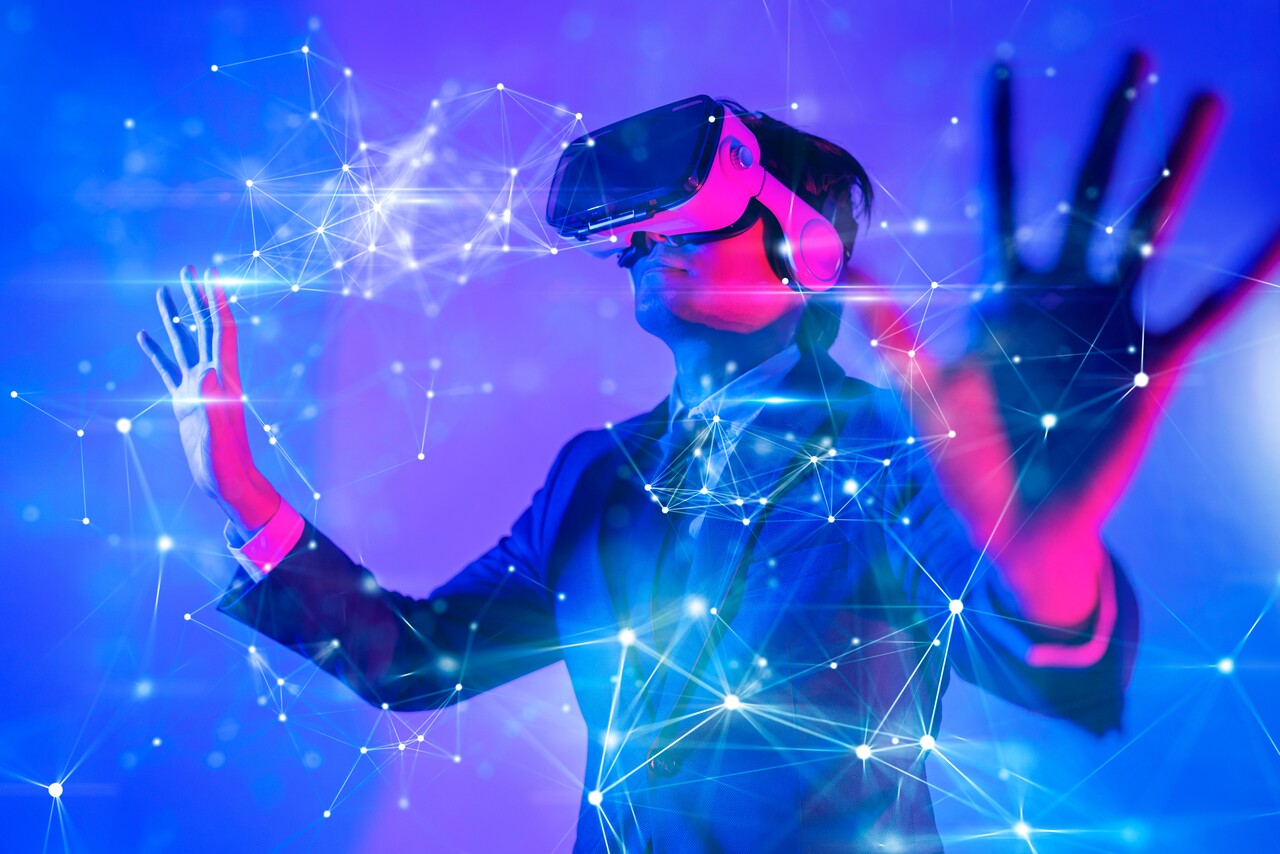
VR is perhaps the most well-known branch of the XR family and offers the most complete immersive experience. When you put on a VR headset, your physical surroundings disappear. Instead, you are placed into a completely digital environment that can be anything from a futuristic space station to a medieval castle.
How VR works
VR uses a combination of high-resolution screens and motion tracking. As you turn your head or move your hands, the digital world responds almost instantly. This creates a sense of "presence," making you feel like you are actually inside the simulation. The headset essentially replaces your vision with a new reality, which is why it is considered the most "isolated" form of XR. This isolation is what allows for such a high degree of immersion, as there are no real-world distractions to break the spell.
Everyday uses for VR
- Gaming: This is a popular use. For gamers, VR offers an intensity that a traditional screen simply can't match. It creates an immersive experience where you aren't just playing the game; you are in the game.
- Training and simulation: Pilots, surgeons, and even athletes use VR to practice complex tasks in a safe environment. This helps provide a way to gain experience without real-world risks.
- Travel and exploration: You can explore the Great Wall of China or the streets of Paris from your living room. For seniors, this can be an outstanding way to revisit favorite places or see parts of the world they thought they’d visit.
Because VR is so immersive, any delay in the data can cause "motion sickness." If the world doesn't move at the exact same time your head does, the experience can become uncomfortable. This is why having a fast, reliable fiber connection is so critical for a smooth, virtually lag-free experience.
Augmented reality: enhancing your physical space
Unlike VR, AR doesn't hide your world. Instead, it adds to it. If you’ve ever played a game on your phone where characters appear to be standing on your kitchen table, or if you’ve used a filter on social media, you’ve used AR.
The magic of AR
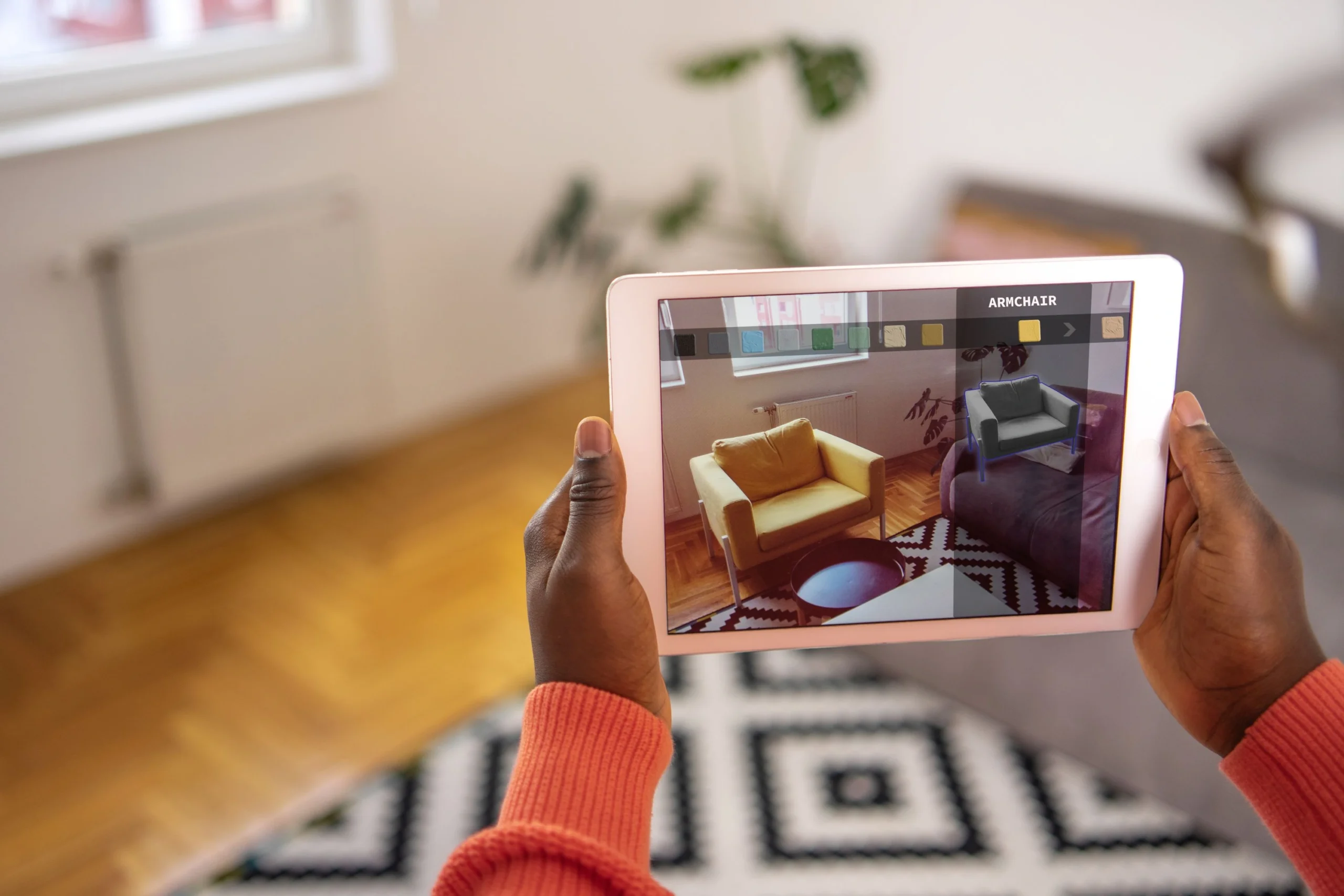
AR uses the camera on your device to see the physical world and then overlays digital images or information on top of it. It’s like looking through a magic window that shows you extra details about what’s right in front of you. While it might feel less "total" than VR, it still provides an immersive experience by making digital objects feel like they have a physical presence in your room. AR is about enhancement rather than replacement, allowing you to stay grounded in reality while benefiting from digital data.
Why AR is growing
- Shopping and retail: Many furniture stores now let you "place" a virtual sofa in your living room to see if it fits before you buy it. This helps minimize the guesswork of home decorating.
- Navigation: Some apps can show you walking directions by drawing arrows directly on the sidewalk as you look through your phone. This helps you find your way in unfamiliar cities with ease.
- Education and literature: Books can come to life with 3D models of dinosaurs or planets appearing on the page, helping to engage students in exciting ways.
For apartment dwellers, AR is a great tool for visualizing how to decorate a new space. However, as AR apps become more complex and the graphics become more realistic, they require additional bandwidth to download those detailed 3D models quickly.
Mixed reality: Where two worlds become one
MR is the most advanced form of XR. It takes AR a step further by allowing digital objects and physical objects to interact with each other in real-time. This is often described as the "gold standard" for an immersive experience because the line between real and digital becomes almost invisible.
In an MR environment, a digital ball could bounce off your actual physical wall and roll under your real-life couch. This requires incredible processing power and a very fast connection because the device has to constantly map your entire room and understand where everything is. MR doesn't just overlay data; it understands the physical geometry of your home.
MR is often used in professional settings, such as a home office or for remote workers. Imagine collaborating with a coworker who is hundreds of miles away, but their "hologram" is sitting at your desk, and you are both working on the same digital 3D model together. This type of immersive experience helps bridge the gap created by physical distance, making it feel like you are in the same room.
The data demands of digital immersion
To achieve a true sense of presence, XR systems must process and transmit an astounding amount of information. Every frame of video must be rendered with high precision, and every movement must be tracked with sub-millimeter accuracy. This is not just a challenge for your computer or headset; it is a challenge for your internet connection.
Packet delivery and timing
When you use the internet, data is broken into small "packets." For a website to load, it doesn't matter much if those packets arrive slightly out of order or with small delays. However, for an immersive experience, the timing must be perfect. If packets of data containing your head position arrive late, the visual world will stutter. Fiber internet helps ensure that these packets move smoothly and consistently from the network to your device.
High-fidelity textures
The "skins" or textures on digital objects in XR need to be high-resolution to look real. These files are much larger than standard images or videos. To load a new virtual environment without waiting for excessive buffering, you need a connection that can pull these large files down from the cloud in an instant.
Why XR needs a robust internet connection
If you think of your internet connection as a highway, XR is like a fleet of massive trucks carrying heavy loads. To keep those trucks moving without getting stuck in a traffic jam, you need a highway that is wide, has a high speed limit, and—most importantly—has very few potholes.
XR technologies are incredibly data-hungry for several reasons:
High resolution and high frame rates
To make a digital world look real, the graphics need to be incredibly detailed. This means your internet has to download massive amounts of visual data every second. Furthermore, these images need to refresh very quickly (high frame rates) to keep the movement smooth. If the connection isn't fast enough, you might experience excessive buffering, which breaks the immersion and ruins the immersive experience. Fiber internet helps provide the high-speed data flow necessary to keep these visuals crisp and fluid.
Low-latency requirements
Latency is the time it takes for a piece of data to travel from your device to the server and back. In standard web browsing, a small delay isn't a big deal. But in XR, latency can be the difference between an outstanding experience and a frustrating one. Low-latency internet helps ensure that your movements are reflected in the digital world almost instantly, helping to keep your senses in sync with the simulation.
Consistency and reliability
XR often involves real-time interaction. If your connection drops even for a second, the entire experience can crash. This is why a connection with 99.9% reliability, based on network uptime or availability, is so important for anyone serious about XR. When the connection stays steady, the immersive experience remains unbroken, allowing you to stay fully engaged in your digital world.
The fiber advantage for immersive technology
Fiber-optic technology is fundamentally different from older types of internet connections. It uses pulses of light sent through glass strands to carry data, which allows it to handle additional traffic with minimal interference. This makes it an excellent choice for the data-intensive world of XR.
Symmetrical speeds
One of the biggest benefits of Quantum Fiber that has is symmetrical speeds on most plans. This means your upload speed is just as fast as your download speed. For XR, uploading is just as important as downloading. Your device needs to constantly upload your movement data, head position, and voice data to the server so the digital world can react. Without fast upload speeds, the experience can feel sluggish, and that sense of an immersive experience will fade almost instantly.
Multi-gig potential
As XR becomes even more advanced, the data demands will only increase. Quantum Fiber offers multi-gig internet in select locations, with speeds of up to 2 Gig, up to 3 Gig, and even up to 8 Gig. Having this level of power helps ensure that your home can handle the traffic from your connected devices, even if several people are seeking their own immersive experience at the same time. This is especially helpful for a small business that might use XR for client presentations or team training.
Unlimited data for unlimited exploration
Because XR uses so much data, you don't want to worry about hitting a cap and being charged extra or having your speeds slowed down. Fortunately, unlimited data is a standard feature of many fiber plans, allowing you to explore virtual worlds for as long as you like. Whether you are a senior exploring digital museums or a student attending a virtual lecture, unlimited data means your immersive experience doesn't have a ticking clock. Plus, with no annual contract and no credit check options, getting started is easy.

Advanced Wi-Fi technology and the role of Wi-Fi 7
While a wired connection is always the most stable, most XR headsets are now wireless for better freedom of movement. This means your home’s Wi-Fi needs to be just as strong as the fiber coming into your house.
Quantum Fiber provides advanced Wi-Fi technology powered by Wi-Fi 7. This is a significant leap forward because Wi-Fi 7 helps provide greater coverage throughout your home than Wi-Fi 6. It’s designed to handle additional data and help minimize interference, which is excellent for wireless VR headsets that need a constant, high-speed connection to function correctly. Wi-Fi 7 also helps provide lower latency over wireless connections than Wi-Fi 6, which is a major benefit for an immersive experience that requires quick reactions.
The router, or, in a Quantum Fiber setup, the hardwired Wi-Fi pod —equipment helps to provide consistent performance and helps minimize the potential for bottlenecks, even in larger homes. By providing better coverage than Wi-Fi 6, Wi-Fi 7 helps ensure that your immersive experience isn't excessively interrupted just because you moved to a different part of the room.
Getting your home ready for the XR revolution
If you’re excited about the future of XR, there are a few things you can do to make sure your home is ready to support a high-quality immersive experience. Beyond just having the right internet plan, the physical setup of your hardware plays a major role in how well your digital worlds perform.
Check your current speeds
Before diving into a new VR game or an MR collaboration tool, it's a good idea to know what you're working with. Use the Quantum Fiber speed test tool to see how your current connection is performing. Look at both your download and upload speeds to ensure they can handle the heavy lifting of XR. If your speeds aren't meeting your needs, it might be time for an upgrade.
Clear your physical space
For the best immersive experience, especially in VR, you need a "guardian" space. This is a clear area where you can move without bumping into furniture or tripping over rugs. Most headsets allow you to draw a digital boundary on the floor. If you step outside this boundary, the headset will show you the real world so you don't walk into a wall. Having a dedicated, open space helps you stay safe while you are fully immersed in your digital adventure.
Manage your connected devices
While fiber internet is designed to handle a heavy load, it’s always a good idea to be mindful of how many devices are using your bandwidth at once. If someone is downloading a massive file in the next room while you are trying to have a low-latency immersive experience, it could create a small bottleneck. Having a multi-gig plan helps ensure that everyone in the house can do what they love without affecting each other’s performance.
Professional installation and router placement
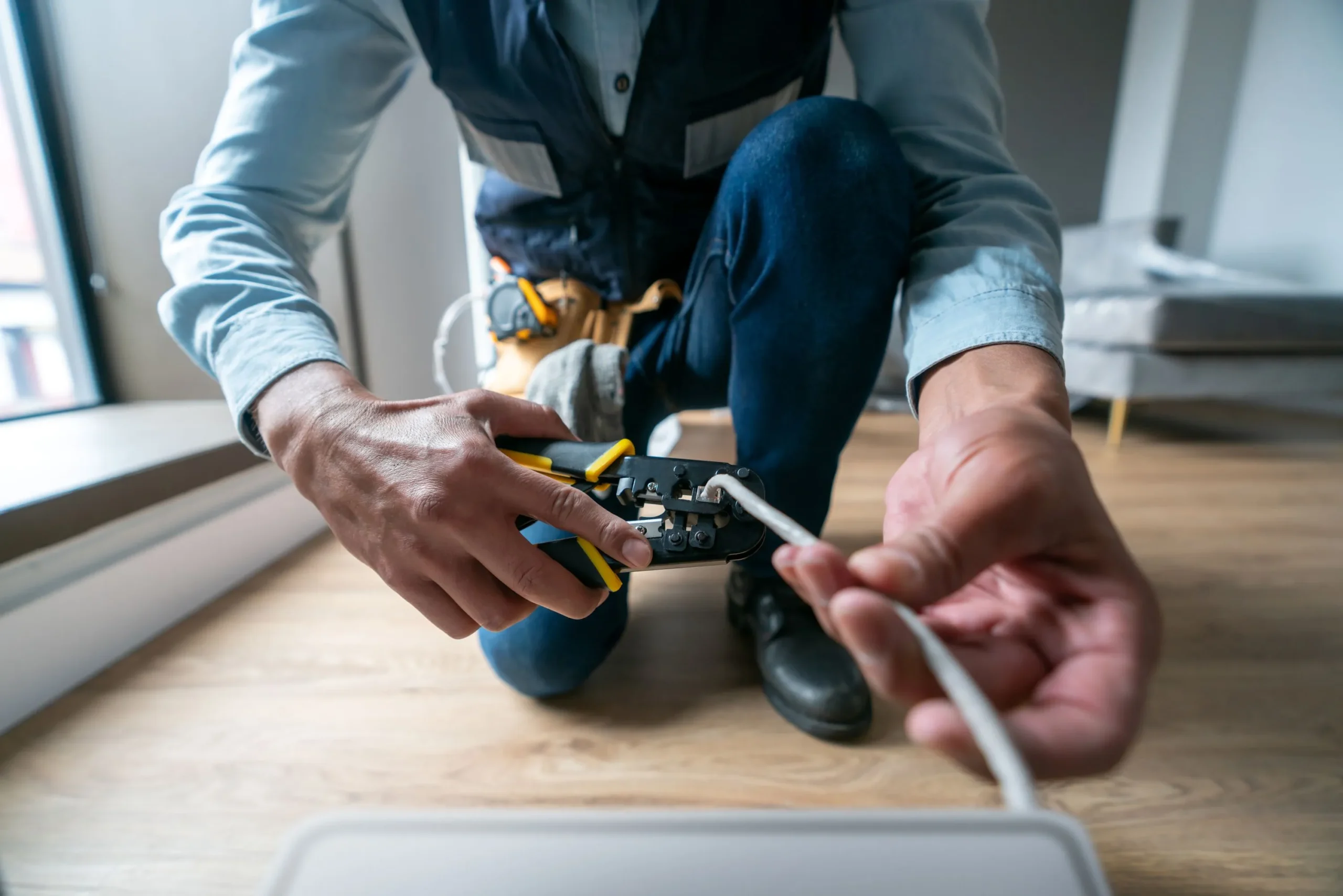
One of the most important factors in your Wi-Fi performance is where your equipment is located. This is where professional installation makes a huge difference. When you choose Quantum Fiber, a technician will work with you to help find the optimal spot for your Quantum Fiber hardwired Wi-Fi pod.
Collaborative placement
The technician won't just pick a spot that is easy for them; they will collaborate with you to understand where you use the internet most. If you have a dedicated gaming room or a home office where you plan to use XR, the technician will help ensure the signal is strongest in those areas. This collaborative approach helps identify open areas away from obstructions, ensuring your advanced Wi-Fi technology helps provide better coverage throughout your home than Wi-Fi 6.
Minimizing interference
Walls, large mirrors, and even kitchen appliances can block or reflect Wi-Fi signals. A professional technician understands these physics and will help place the Wired Pod in a central, elevated location. This helps minimize potential interference and helps provide a consistent connection for all your devices. By working with a professional, you can help ensure that your home network is optimized for the high-bandwidth demands of an immersive experience.
Testing the signal
Once the Wi-Fi equipment is in place, the technician will test the signal in different rooms. This helps ensure that there are no significant dead zones and that the performance is consistent across your home. This level of care helps provide a foundation for a virtually uninterrupted digital experience, giving you the peace of mind to explore XR without worrying about your connection.
Frequently asked questions about XR
Do I need a special computer for XR?
It depends on the device. Many AR apps work on standard smartphones. However, high-end VR and MR usually require either a powerful PC or a standalone headset with its own built-in processor. If you are using a PC-based headset, your internet connection is even more critical for helping to sync that data between the headset, the computer, and the internet.
Is XR the same as the "Metaverse"?
The Metaverse is often described as a collection of digital worlds that you can visit using XR technology. While they are related, XR is the technology that makes the Metaverse possible. An immersive experience is the feeling of presence you get when you enter the Metaverse and interact with others in a digital space.
Can kids use XR?
Yes, there are many educational and fun XR experiences designed for children. However, most VR headset manufacturers recommend their products for kids aged 13 and up due to concerns about eye development and the physical weight of the hardware. Parents should always supervise their children when using these devices and ensure they take frequent breaks.
Why is fiber better is great for VR?
Fiber helps provide low latency and high speeds, which can translate to a smooth, realistic experience. It also helps provide the consistent performance needed for high-resolution graphics that define a top-tier immersive experience. Fiber is also not susceptible to electromagnetic interference, which helps keep the connection steady even during peak usage times.
How much space do I need for a VR immersive experience?
While some games can be played while sitting or standing in one spot, many "room-scale" experiences recommend a clear space of at least 6.5 feet by 5 feet. This helps you move around safely while your vision is obscured by the headset. Always ensure your space is free of hazards like pets, small children, or breakable objects.
A future without limits
The world of XR is just beginning to unfold. From changing how we learn and work to offering entirely new ways to play, XR is set to become a major part of our digital lives. But to truly enjoy everything it has to offer, you need an internet connection that can keep up with its massive appetite for data.
Quantum Fiber Internet is designed for this very future. With lightning-fast speeds, 99.9% reliability based on network uptime or availability, and advanced Wi-Fi technology, it helps connect you to the experiences that matter most. Whether you’re stepping into a virtual arena for a high-stakes match or bringing digital art into your living room to show your friends, we’re here to help make sure your journey is as smooth and immersive as possible.
Are you ready to see how your current connection stacks up before you dive into the world of XR?
What virtual world would you visit first if you had the chance to have a truly immersive experience?
Content Disclaimer - All content is for informational purposes only, may require user’s additional research, and is provided “as is” without any warranty, condition of any kind (express or implied), or guarantee of outcome or results. Use of this content is at user’s own risk. All third-party company and product or service names referenced in this article are for identification purposes only and do not imply endorsement or affiliation with Quantum Fiber. If Quantum Fiber products and offerings are referenced in the content, they are accurate as of the date of issue. Quantum Fiber services are not available everywhere. Quantum Fiber service usually means 100% fiber-optic network to your location but, in limited circumstances, Quantum Fiber may need to deploy alternative technologies coupled with a non-fiber connection from a certain point (usually the curb) to your location in order to provide the advertised download speeds. ©2026 Q Fiber, LLC. All Rights Reserved. Quantum, Quantum Fiber and Quantum Fiber Internet are trademarks of Quantum Wireless LLC and used under license to Q Fiber, LLC.