

In the coming years, your home internet won't just be about browsing websites or sending emails. The digital world is about to take a quantum leap, bringing us closer to a truly intelligent and seamless connected life. By 2026, trends like advanced Artificial Intelligence (AI), immersive entertainment, and fully unified smart home ecosystems will be the new normal.
Think of your internet service as the foundation of a house you’re building. You wouldn't build a massive, complex skyscraper on a shaky, shallow foundation. Similarly, you cannot power the demanding technologies of 2026—like AI agents processing 4K video feeds or multiple people simultaneously streaming 8K content—on anything less than a high-performance network.
The good news is that fiber internet, with its inherently stable and high-speed design, is the ultimate digital foundation. It is ready today to help you embrace the future, helping to provide the speed, low-latency, and 99.9% reliability, based on network uptime or availability, that these advanced trends demand.
Key Takeaways
- The future of home connectivity in 2026 will be defined by the convergence of Artificial Intelligence (AI), immersive streaming, and highly automated smart homes.
- These advanced technologies demand a robust internet foundation with low-latency, and high reliability, which fiber internet is uniquely suited to help provide.
- AI is evolving into proactive “agents” within the home, automating complex tasks and managing systems based on real-time sensor data, requiring fast, two-way data flow.
- High-resolution streaming and the rise of immersive content, like 8K video and extended reality (XR), are driving the need for multi-gig speeds and enhanced bandwidth.
- Quantum Fiber helps keep your expanding ecosystem of smart devices seamlessly connected and performing smoothly using advanced Wi-Fi technology, including Wi-Fi 7.
Jump to the sections that matter to you:
- Trend 1: The rise of AI and the intelligent home
- Trend 2: Streaming, immersive entertainment, and beyond
Cloud gaming and the competitive edge - Trend 3: Smart homes evolve into unified ecosystems
- How fiber internet supports future trends
- The Quantum Fiber advantage: A network built for tomorrow
- Frequently asked questions
- Ready to experience the future of connectivity?
Let’s dive into the biggest trends shaping your digital experience in 2026 and explore how Quantum Fiber Internet® helps keep you ahead of the curve.
Trend 1: The rise of AI and the intelligent home

Artificial Intelligence (AI) is rapidly moving out of the laboratory and into the living room. What was once a collection of simple voice assistants is quickly evolving into a true "intelligent home" where AI acts as a proactive manager, coordinating devices, optimizing energy, and even anticipating your needs.
AI agents: Your home’s new proactive manager
The next generation of AI assistants are not just smart speakers; they are evolving into intelligent "agents" that can reason, plan, and execute complex, multi-step tasks on your behalf. For instance, an AI agent could manage your utilities, set complex security routines, or adjust climate control based on the daily weather forecast and your habits—all without you lifting a finger.
To function effectively, these AI systems rely on a hybrid architecture, using small language models (SLMs) on the device (the "edge") for local, fast processing, while powerful Large Language Models (LLMs) in the cloud handle complex reasoning. This hybrid model requires a constant, high-volume, two-way exchange of data between your devices and the cloud.
Symmetrical speeds: The backbone for a thinking home
This is where the advantage of symmetrical speeds, on most plans, provided by Quantum Fiber becomes clear. Many traditional internet connections offer a much faster download speed than upload speed. In the past, this was fine, as most of what you did online was downloading (streaming movies, loading web pages).
However, the AI agentic home is different:
- Pervasive sensing: Your smart home relies on continuous input from numerous devices, including multiple 4K security camera feeds, audio monitoring, and environmental sensors.
- High-volume uploads: All this sensor data is constantly being uploaded to the cloud for the AI to analyze and act upon.
- Two-way data highway: Fiber internet’s symmetrical design ensures that your upload speed matches your download speed, creating a robust, high-volume, two-way data highway. This helps ensure that the massive amounts of sensor data are transferred rapidly and reliably, enabling the AI to build the detailed environmental model it needs for proactive decision-making.
Without powerful symmetrical upload speeds, this continuous stream of data could slow down, causing your intelligent home to stutter or delay its actions. Quantum Fiber provides a range of plans, most with symmetrical speeds, designed to help provide you with the enhanced capacity for sending and receiving data.
Low-latency internet: Real-time responsiveness is key
Another critical factor for AI is low-latency internet. Latency is the delay before a transfer of data begins following an instruction. Think of it like a conversation: High latency is a stuttering phone call with a long, awkward pause after every question. Low-latency is a smooth, real-time chat.
For an AI agent, low-latency is vital:
- Instant decisions: The agent needs to make decisions practically instantly to be effective, such as quickly identifying and responding to an unusual event captured by a security camera.
- Proactive action: Low-latency internet helps ensure the system acts before a problem escalates, rather than after a noticeable delay.
Because data travels through fiber-optic cables as light signals—which moves at nearly the speed of light—it can experience significantly less interference than electrical signals over copper wires. This results in ultra-low-latency, which helps ensure that AI tools can respond almost instantly and execute commands with near-zero delay.

Trend 2: Streaming, immersive entertainment, and beyond
Streaming is no longer just about binge-watching a high-definition (HD) series. The next wave of entertainment is high-resolution, immersive, and increasingly interactive.
Beyond 4K: The move to 8K and extended reality (XR)
The demand for enhanced quality is unrelenting. By 2026, the shift to 8K video is expected to accelerate, and extended reality (XR)—which includes virtual reality (VR) and augmented reality (AR)—will move into the mainstream.
To put the bandwidth demands in perspective:
- 4K Streaming: Already requires a strong connection to maintain smooth, consistent experience.
- 8K Streaming: Requires four times the pixels of 4K, placing an exponential strain on your network.
- Extended Reality (XR): This is the next frontier. Imagine a family member immersed in a high-fidelity VR meeting while another is exploring an AR cooking lesson. This type of real-time, high-fidelity experience demands massive bandwidth to maintain a seamless experience and a reliable connection.
Quantum Fiber offers multi-gig internet, in select locations, with speeds of up to 2 Gig, up to 3 Gig, and up to 8 Gig. These enhanced speeds and capacity are what serious streamers, connected businesses, and homes full of new and next-generation smart devices need to manage the massive data required for future entertainment.
Cloud gaming and the competitive edge
Cloud gaming is also set to boom, making graphics-intensive games more accessible without the need for expensive, high-end hardware. The game essentially runs on a powerful remote server, and the video feed is streamed to your device.
For gamers, two things are non-negotiable: high speed and low-latency.
- Speed for Graphics: Fast speeds help ensure the ultra-high-definition video stream of the game can be delivered to you with minimal buffering.
- Low-Latency for Control: Your controls (the clicks, button presses, and stick movements) have to be sent from your house to the server and back to you practically instantly. Low-latency internet helps ensure a virtually lag-free experience, giving competitive gamers the responsive edge they need.
The symmetrical speeds on most plans from Quantum Fiber are also a huge benefit for online gaming, particularly live streaming your gameplay and uploading content, which requires robust upstream capacity.

Trend 3: Smart homes evolve into unified ecosystems
The era of having a dozen separate apps to control a dozen separate smart devices is ending. In 2026, the trend is toward truly unified ecosystems where devices from different brands speak the same language, controlled through a single, intelligent interface. Smart homes are evolving to feel intuitive, invisible, and personalized.
More devices, better integration
The Internet of Things (IoT) is exploding, with billions of devices now connected to the internet, and this growth is set to accelerate. You'll see smarter-than-ever security cameras with facial recognition, integrated health and wellness monitoring systems, and appliances that manage themselves.
The more connected devices you have—from smart plugs and lighting to energy management systems—the greater the demand on your whole-home Wi-Fi network. Each device, even when idle, consumes a slice of bandwidth and adds to the overall network traffic.
The unlimited data provided by Quantum Fiber is a tremendous benefit here. With a constantly growing ecosystem of devices feeding data to the cloud, you never have to worry about data caps or throttling, no matter how much data your connected devices consume. This helps ensure you have the peace of mind to add new smart devices to your home without stressing about monthly usage limits.
The critical role of whole-home Wi-Fi
The network of the future needs to not only handle the traffic from your connected devices but also blanket your entire living space with a consistent, strong signal. A connected home is only as smart as its weakest link, and a spotty Wi-Fi signal can create frustrating bottlenecks or prevent AI agents from getting the real-time data they need.
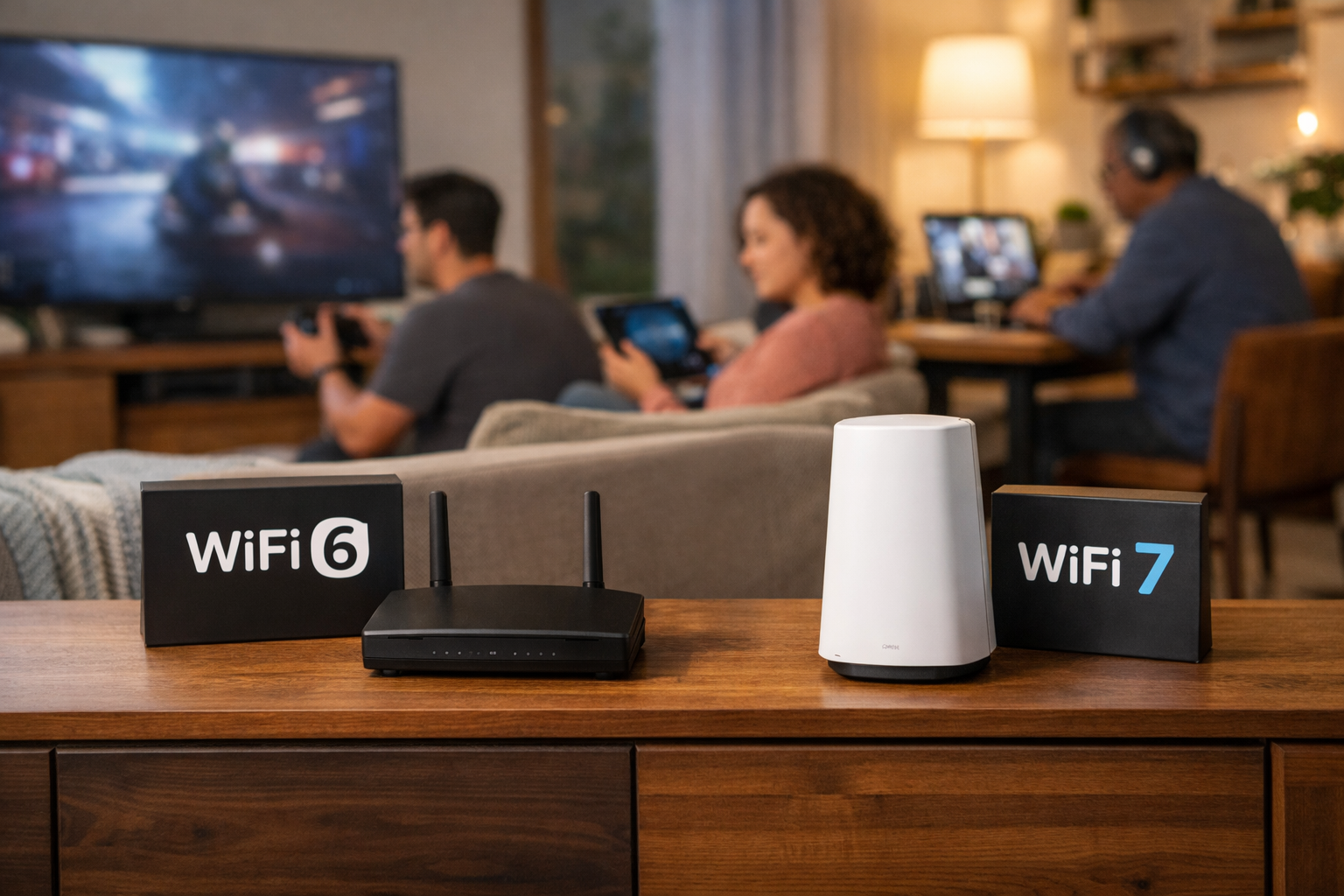
Avanced Quantum Fiber Wi-Fi technology, including Wi-Fi 7, helps provide a seamless experience. Wi-Fi 7 is designed to handle more traffic than previous generations, similar to how more vehicles can fit on a wider road.
Specifically, Wi-Fi 7 helps provide greater coverage throughout your home than Wi-Fi 6. This enhanced coverage helps reduce the need for a mesh network in many homes. The main component is a hard-wired Wired Pod (which is what many people commonly call “the router”) that connects to the SmartNID (Smart Network Interface Device). The technician will work with you during installation to find the best location for the main fiber equipment and the Wired Pod, which must remain three feet from the router.
How fiber internet supports future trends
| 2026 Trend | Key Network Requirement | Quantum Fiber Feature | Benefit for Home |
| AI Agentic Home | High-volume two-way data flow | Symmetrical speeds, on most plans, up to 940 Mbps, up to 8 Gig | Helps ensure real-time analysis of security cameras and sensor data |
| Immersive Streaming | Massive, consistent download capacity | Multi-gig speeds and Unlimited Data | Seamless experience for multiple 4K/8K streams and XR applications |
| Cloud Gaming/Real-Time Apps | Minimal data delay | Low-latency internet | Virtually lag-free gaming and instant AI responsiveness |
| Unified Smart Home | Consistent, wide-ranging wireless signal | Advanced Wi-Fi technology, including Wi-Fi 7 | Helps provide enhanced connectivity for a wide range of devices across your space |
| Always-On Security & Automation | Consistent service uptime | 99.9% reliability, based on network uptime or availability | Helps keep critical systems running virtually uninterrupted |

The Quantum Fiber advantage: A network built for tomorrow
The digital trends emerging in 2026 are more than just incremental upgrades; they represent a fundamental change in how we live and interact with our homes and the world. This future of AI, immersive entertainment, and hyper-connected smart homes requires a robust, modern foundation.
Fiber internet, with its unique ability to help provide ultra-low-latency, symmetrical speeds, on most plans, and unwavering 99.9% reliability, based on network uptime or availability, is the outstanding solution. Quantum Fiber is built on a fiber-optic network that uses light pulsing through special glass filaments to zap information back and forth at nearly the speed of light. This infrastructure is inherently prepared to handle the bandwidth-intensive, real-time demands of the next generation of technology.
Choosing Quantum Fiber means you are choosing a network that not only meets your needs today but is also engineered to evolve with the accelerating pace of technology. With options for multi-gig speeds, Unlimited Data, and the latest Wi-Fi 7 technology, you can confidently embrace the future of the intelligent, connected home.
The modern home requires a digital foundation that is both fast and flexible. Quantum Fiber offers just that—a commitment to a powerful, reliable connection with no annual contract. It’s connectivity designed for the freedom and speed that the future demands.
Frequently asked questions
What is the biggest difference between symmetrical and asymmetrical speeds for future trends like AI?
Symmetrical speeds, which are available on most plans from Quantum Fiber, means your upload and download speeds are similar. This is critical for future trends like AI-powered smart homes because these systems rely on constantly uploading massive amounts of data from security cameras and sensors to the cloud for real-time analysis. Asymmetrical speeds, which prioritize downloads, can create bottlenecks when the home is trying to send out a high volume of data.
Why is low-latency internet so important for the future of the internet?
Low-latency is critical because it helps ensure that data is transmitted with minimal delay. For cloud gaming, it helps provide a virtually lag-free experience where your actions are registered instantly. For AI, low-latency is what helps enable proactive, real-time decisions, meaning the AI agent can act before a problem occurs, rather than after a noticeable delay.
Does Quantum Fiber offer the equipment needed to support these new trends?
Yes. Quantum Fiber offers advanced Wi-Fi technology, including Wi-Fi 7, with a hard-wired Wired Pod (the router) that helps provide greater coverage throughout your home than Wi-Fi 6. This helps to minimize the potential for bottlenecks and helps keep all your connected devices running smoothly.
Will a smart home with many devices still perform well with Quantum Fiber?
Yes, absolutely. Quantum Fiber is engineered to handle the traffic from your connected devices and the continuous data demands of a modern smart home. The combination of unlimited Data, multi-gig speed options, and advanced Wi-Fi 7 technology helps ensure that your network can effortlessly support multiple users, numerous connected devices, and simultaneous cloud application usage, contributing to a smooth experience.
Ready to experience the future of connectivity?
The internet of 2026 is poised to be an era of intelligent, hyper-connected, and immersive experiences, where AI, streaming, and smart homes converge. To fully participate in this future, you need a network that is not just fast, but inherently stable and built for bidirectional traffic and low-latency performance.
Quantum Fiber Internet helps provide the essential foundation, offering the speed, low-latency, and 99.9% reliability, based on network uptime or availability, that next-generation technology demands.
Content Disclaimer - All content is for informational purposes only, may require user’s additional research, and is provided “as is” without any warranty, condition of any kind (express or implied), or guarantee of outcome or results. Use of this content is at user’s own risk. All third-party company and product or service names referenced in this article are for identification purposes only and do not imply endorsement or affiliation with Quantum Fiber. If Quantum Fiber products and offerings are referenced in the content, they are accurate as of the date of issue. Quantum Fiber services are not available everywhere. Quantum Fiber service usually means 100% fiber-optic network to your location but, in limited circumstances, Quantum Fiber may need to deploy alternative technologies coupled with a non-fiber connection from a certain point (usually the curb) to your location in order to provide the advertised download speeds. ©2026 Q Fiber, LLC. All Rights Reserved. Quantum, Quantum Fiber and Quantum Fiber Internet are trademarks of Quantum Wireless LLC and used under license to Q Fiber, LLC.